🕯️ In useful memory
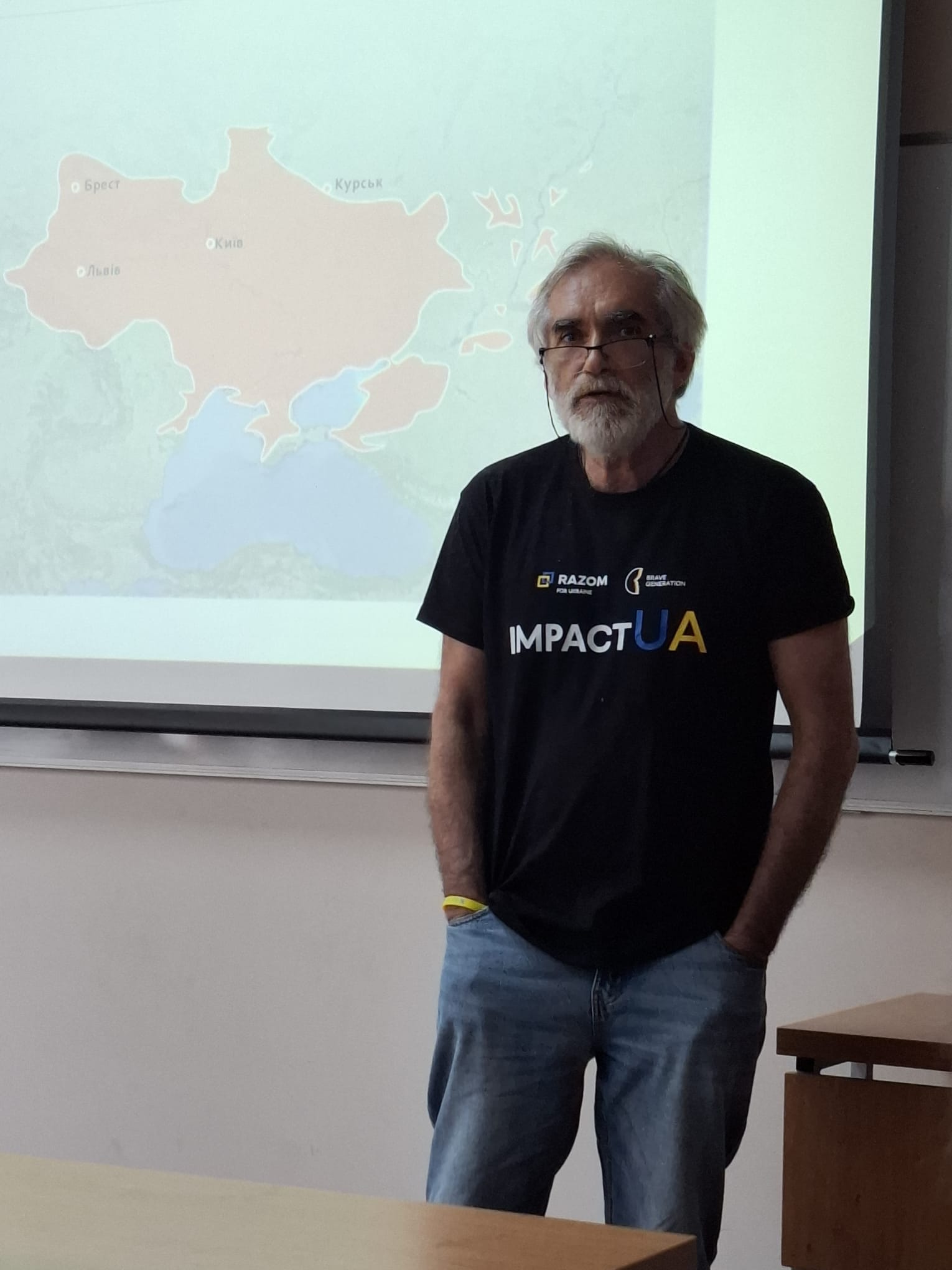
[Long read.] How does a country forget a famine that killed millions of its own? This year's lecture on Ukraine's history was an unexpected rollercoaster through human migration, repeated destruction, collective memory, and nation building.


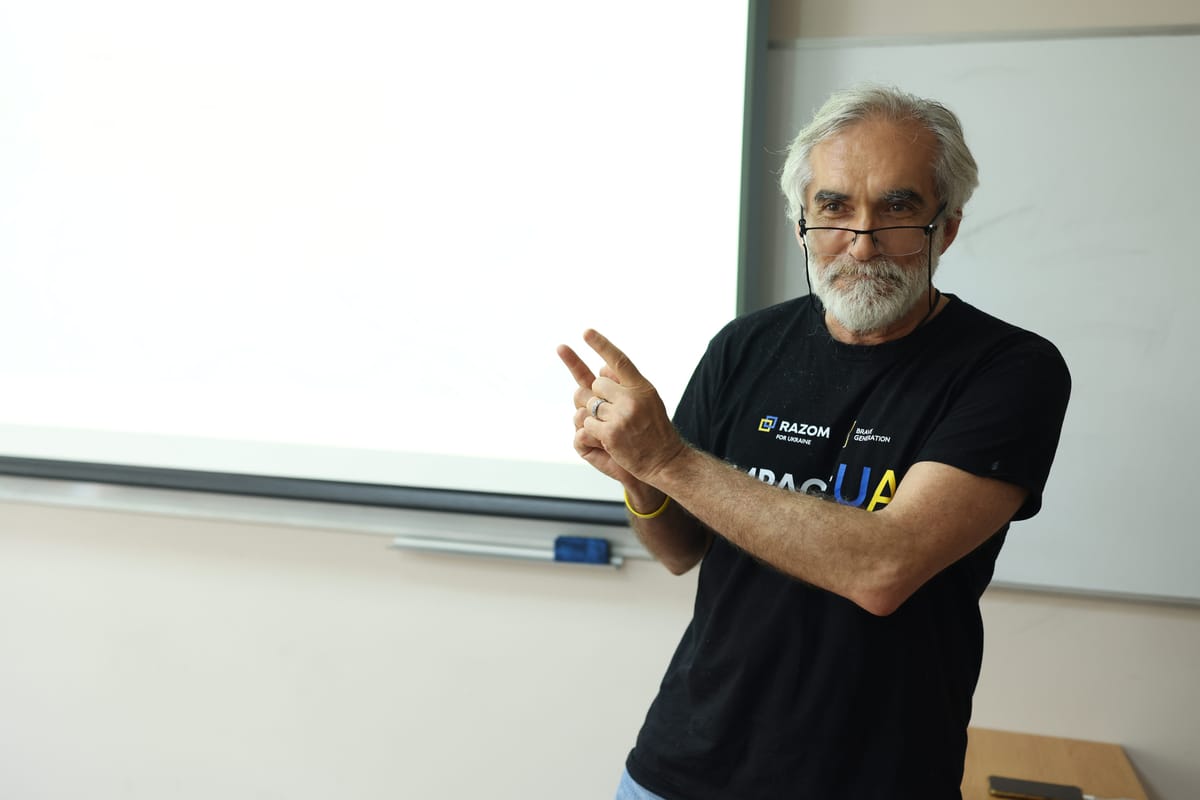
Last year, Yaroslav Hrytsak gave a very thorough exposition of Ukraine's pivotal moments — a baptism, an uprising, a revolution etc. This year, we got a more general education about how violence shapes nations and memories — with Ukraine as leading example.
I'll do my best to relay his insights — or rather: my honest but flawed interpretation thereof.
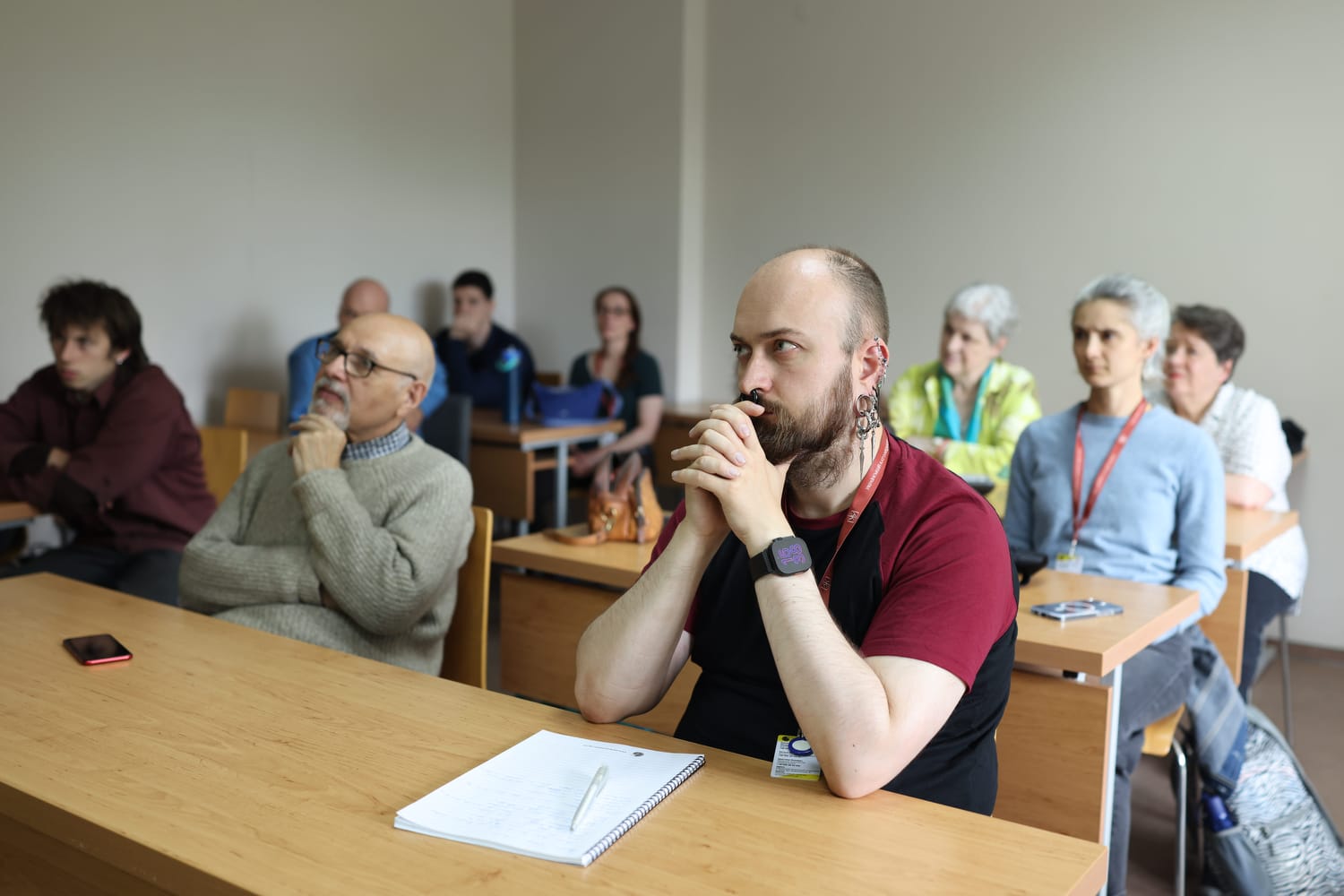
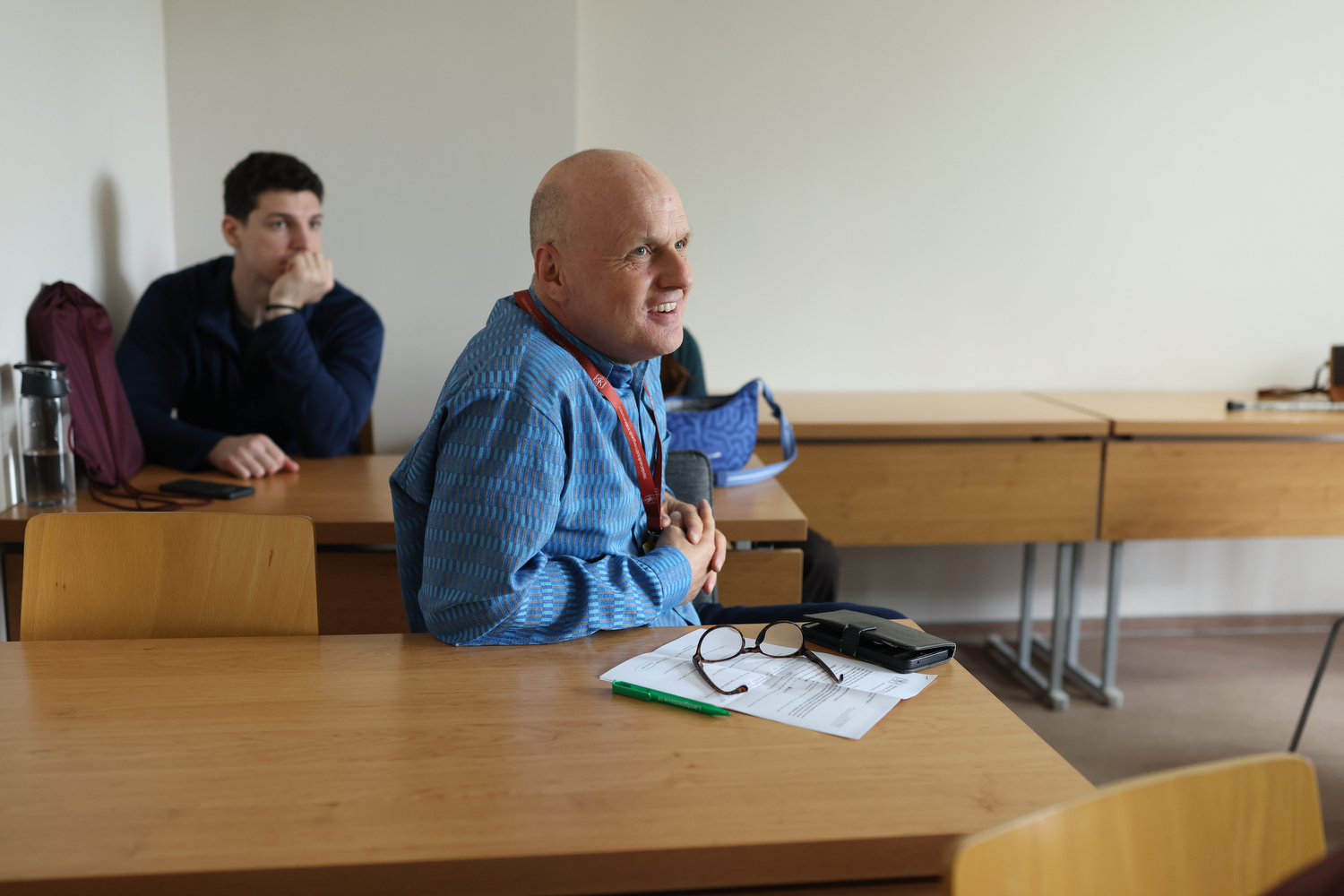
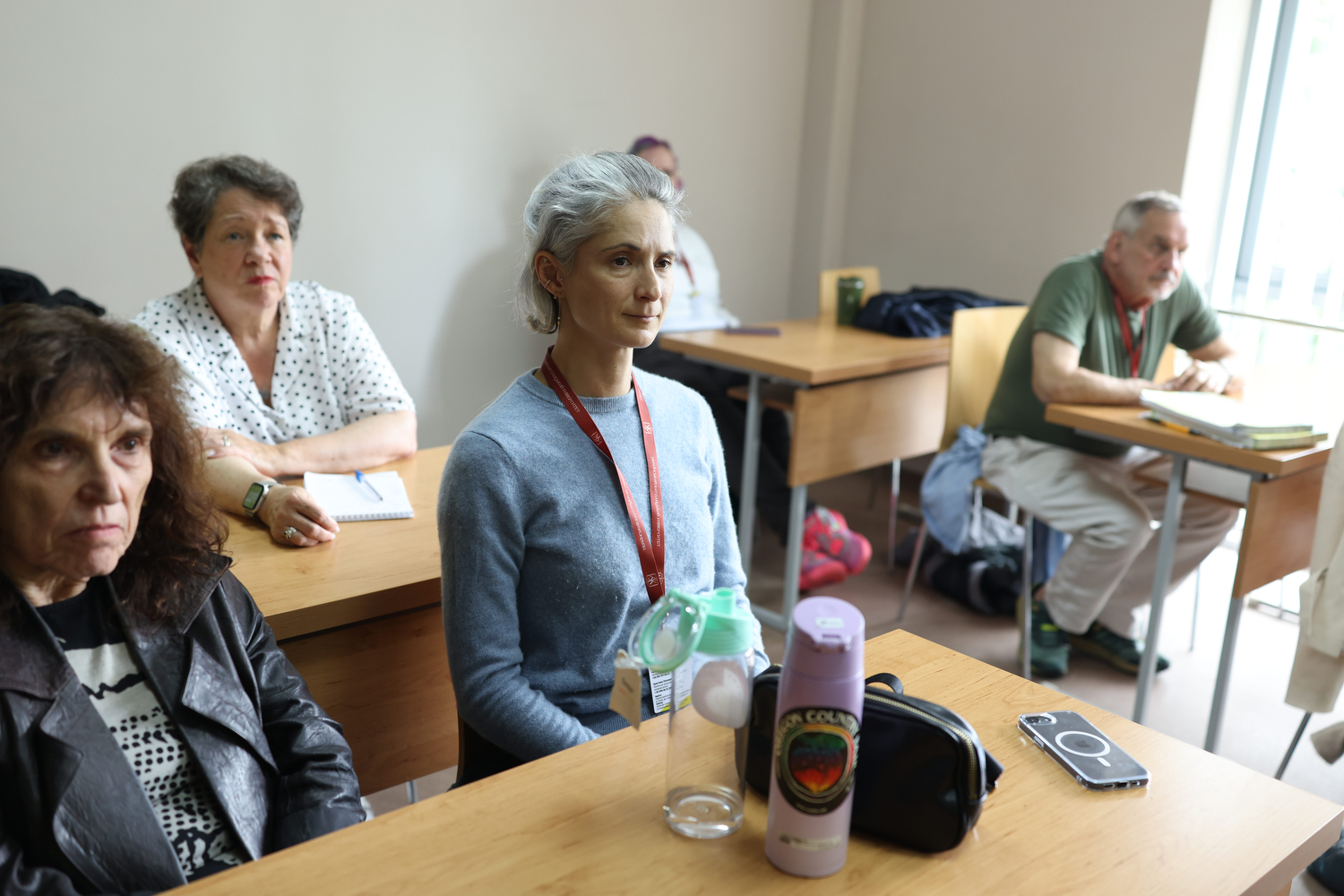
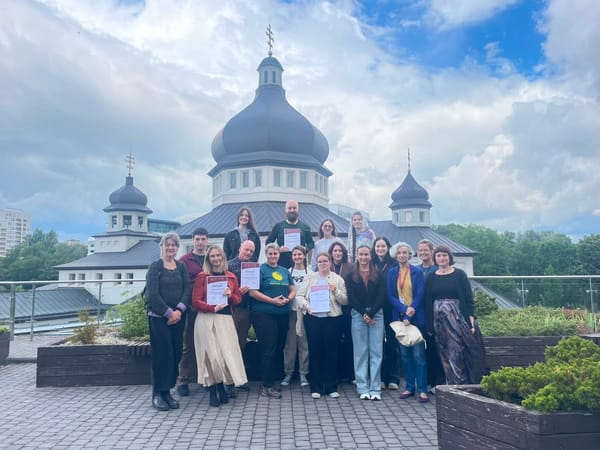
Listening attentively
Ukraine at the cradle of civilisation
If I follow Hrytsak correctly, humans fanned out from Africa and at some point settled in Ukraine long ago. From there they spread in all Indo-European directions: to (more Western and Northern) Europe and Eastward to (modern day) Iran. In a way, Ukraine is the cradle of Indo-European-ness.
Recently, ancient cities were excavated in Ukraine. These cities were dated between 4100 and 3600 BC, even earlier than Mesopotamia. This civilisation had culture but no writing. Those cities were destroyed by unknown causes or aggressors.
The specifics I cannot verify, but the gist is that Ukraine wasn't a latecomer among civilisations nor a no-man's-land. Rather, there has been a recurring destruction of whatever civilisation would be blooming at the time.
Ukraine as the frontier of civilisation
The Ukrainian territory includes the "Wild East" (like the Wild West) — the southern and eastern parts of Ukraine. These wild parts are part of the European-Asian steppe, which stretches from Ukraine to Mongolia.
The steppe is a flat (badly defensible) landscape with scorching summers, freezing winters and barely any wild animals. Most of the steppe is only survivable by nomads who roam from spot-to-spot to find new food.
Nomads are generally violent — the infamous Golden Horde exemplifies this. Life is about hunting and moving, not growing and settling. Nomads on horseback basically have medieval tanks and outclass whatever they hunt. Slave-trade (compare: "slavic") is a particularly popular business model for nomads.
Now, Ukraine's part of the steppe is special, because it has black soil (chernozem), which is exceptionally fertile. Contrary to most of the steppe, farmers could settle here. That means that Ukraine has a steady influx of enslavable farmers and violent raiders. You do the math.
Rise and fall of Kyivan Rus'
In the 11th and 12th century, Kyiv belonged to the top 10 cities in the world. It was settled by vikings at the crossroad between various trade routes. In a way, it was a bit like how the Dutch founded and used New York. The Kyivan Rus' kingdom was as European as any other.
Between 1240 and 1482 Kyiv was razed and to a large extent destroyed. It became a borderland townlet, but the political center was no more. It took until the 19th century before Kyiv would be restored.
Timothy Snyder called the territory between Berlin and Moscow the bloodlands, because even in the 20th century, it has been unstable and violent.
Ultimately, in 1000 years, there would be 30 different states on Ukrainian territory. Each rose and fell in less than 300 years. The Ukrainian soviet republic was actually one of the shortest states — just 70 years.
War is important for nation building
War is ugly and sad. Being in a country in an active concrete war, I find it painful to zoom out and talk about war in an abstract sense. And yet I must — because Hrytsak teaches us that how we remember pain determines the future.
Extreme experiences can also foster the emergence of national identities and resilience across generations in society. That is not to say that peace would not allow that, but like necessity is the mother of invention, war pressures societal processes to accelerate.
Paradoxically, peace itself seems most difficult to build. And it has to be constructed, attained and sustained deliberately — it is not the default. But how do you build peace? Or is peace the result of building a nation with an identity and founding memories?
Nation building happens by making collective historical memories. According to Hrytsak, historical memories are selective and useful parts of the past. Paradoxically, collective traumas (losses) work better than successes (victories). And nations don't make memories in isolation — most stories need an adversary. And so war accelerates nation building.
In Ukraine's history the Poles, Jews, and Tatars were often enemies — and now they are allies. Those traumas were (mostly; see below) processed as historical memory, and hostility is no longer contributing to national identity. Reconciling ancient hostility doesn't need to be a conclusion ("all's well that ends well"). Even peace after war can be made into a useful historical memory.
For a long time, russia used to be an ally — because of the shared Orthodox Christian faith. Hostilities over the past centuries made the historical memory of peace not useful anymore — in fact: being betrayed by a former ally may be worse than being dominated by an enemy.
The reconciliation between Germany and France was the stepping stone to the European Union. To this day, the historical memory we have about the EU (incl. predecessors) is one forged in the blood of former arch-nemeses coming together. Alternatively, one could explain the emergence of the EU as a tool for the European nations to remain relevant after they lost their colonies and dominion on the international stage after WW2. Or one could say that France and Germany didn't trust each other whatsoever and 'married' to keep the enemy closer. True or not — none of those alternative explanations would be as useful as the narrative we have come to accept.
Forgotten memories
When Hrytsak graduated from the university's historical department in Lviv in 1982, he didn't know about the Holocaust. He only learned that Hitler did something to the Jews because of the BBC radio that was allowed under Gorbachev a few years later, but not the full Holocaust history.
He also didn't know about the Holodomor. I was surprised to hear this — how can Ukrainian society forget about the Holodomor it suffered? Apparently, under pressure and threat of authorities and the unbelievable pain, many parents chose to simply not tell their children — and so the knowledge was lost.
It was the diaspora of Ukrainians to America that kept the memories of what happened in Ukraine alive long enough to re-share them back later to a Ukraine that forgot about them.
Co-student Daan and I reflected on how surprising (or not) this mechanic is. In the Netherlands, we have more than enough shameful history. Immediately after the Second World War, Indonesia suffered our politionele acties ("police actions" sounds even more justified than a "special military operation", no?) — until the United States threatened to withdraw Marshall Plan aid to rebuild the Netherlands. Only in 2022 did research authoritatively conclude that Dutch actions were systematically excessively violent.
But this example of collective amnesia is from the perpetrator-side. As a perpetrator is useful to forget you committed crimes. A better comparison to Ukrainians forgetting the Holodomor would be if Indonesians forgot about the Dutch "police actions" and only learned about it in 2022.
The closest thing in Dutch history I can think of as forgotten memory "as a victim" is that the Netherlands was innocent in WW2 — we wanted to be neutral in the war and basically all of us were in the resistance. This memory is very selective. There was surely some resistance, but the Netherlands also had the highest proportion of Jewish deportations of any country in Western Europe — which couldn't have happened without significant collaboration.
The truly selective part is that when surviving Jews who returned to the Netherlands after the war, they found their houses and properties simply claimed by others. Furthermore, they were billed rent and taxes on those seized properties for the time they were in concentration camps or seeking refuge elsewhere. We conveniently forgot about these post-war transgressions because it was easier to think "we all suffered and made sacrifices". It surprised me to learn that the victims could be so callous to other victims. And the hypocrisy was probably so painful at the time, that it took a few decades to resurface.
All of this shows how malleable memories are — even in a society that lived the events of those memories.
Betraying memories
The war russia perpetrates against Ukraine since 2014 is unusual. David Wood, war journalist for over 30 years, has documented many wars. What struck him about this war is how clear-cut it is — russia is the aggressor, Ukraine is acting in self-defence.
Clarity about who is in the wrong doesn't necessarily mean the other party is fully right about everything, though.
Zelenskyy recently named a military unit "Heroes of the UPA". This caused huge backlash in Poland, leading to stripping of honorary titles and diplomatic consequences. Poland claims the UPA is responsible for 100,000 deaths in the Volhynia/Volyn massacre/genocide. Ukraine says UPA was fighting for Ukrainian independence against the soviets and it was a two-sided tragedy with many deaths on both sides.
Before russia's war on Ukraine, Stepan Bandera — a leader of the UPA — was a controversial figure even in Ukraine. In the 3rd month of the full-scale invasion, professor Yaroslav Hrytsak noticed a shift in public perception in Ukraine: the controversy around UPA/Bandera lessened and they became primarily a symbol of resistance against russia. "One man's terrorist is another man's freedom fighter." The historical facts didn't change, but the memories did.
The Poles have long remembered themselves as victims from the nazis, the soviets, UPA etc. Then, in 2000 and 2001, it was discovered that in July 1941 the Polish inhabitants of Jedwabne (half the town) massacred the other (Jewish) half. The notion that not just Germans but also some Poles participated in the genocide was a shock to the Polish nation. Such a challenge to a fundamental historical memory is a moral injury. Moral injuries are very hard to process for individuals, let alone a nation. It will undoubtedly weigh on how the Poles perceive Ukraine and its memories.
A shared future requires a shared story. Polish and Ukrainian intellectuals realised this earlier as well. In 1951, Jerzy Giedroyc stated in the journal Kultura that Lviv is a Ukrainian city and Poles must accept this for the sake of Poland. The Polish political movement Solidarity concluded it must see Ukraine as an ally only. This wasn't a recognition of guilt or innocence; it was a re-selection of what historical memories are useful for the nation(s).
The recent animosity between Poland and Ukraine is therefore a reminder of how important it is to not only find truth, but also select which truth makes the best memory. The EU couldn't work if France thought it was about enemies coming together and Germany thought it was about winning the peace.
Hrytsak did not make any predictions on how this will evolve. If I have to make a prediction, I think — some time after the war — Ukraine will ultimately come to disavow the UPA again. I also think Poland will be strong enough to find and acknowledge more dark pages in its history (like the Jedwabne-case). And two wrongs won't make a right, but I think a shared quest for truth is a more solid basis for the future than a clean past. For a more developed view on this matter, I defer to Timothy Snyder, ardent supporter of Ukraine, but critical on both Ukraine and Poland in this matter.
Future memories
Imagining an end to the war seems premature. And yet it is clear that any true end — not a ceasefire, but actual peace — is going to be a very tall order.
After the war ends, no matter the sacrifice, Ukraine will have a powerful historical memory actively supporting nation building. Ukraine is rapidly homogenising internally and gaining power and momentum. This country gets to learn the benefits and cost thereof. Ukraine may join the EU, and show more leadership than some founding countries. Or Ukraine may decide it has become strong enough to go it alone. It has choices.
Meanwhile, russia is stagnating and declining due to the war it instigated. Once the war ends, russia will have to reckon with the cost of the war — a war that actually consolidated and united the EU, NATO and Ukraine against it more than ever. Even if it manages that, what would it take for russia to get a useful historical memory from this war that works towards rehabilitation?
According to Hrytsak, this war is also a fight between the last soviet generation (Putin) versus the first post-soviet generation (Zelenskyy). Indeed, it feels to me like a fight between a memory of greatness, versus the future of one.
Acknowledgements
I owe many thanks to Yaroslav Hrytsak for giving the lecture of which this blog post is a second-hand report. Hrytsak is a Ukrainian historian and publicist, doctor of Historical Sciences, Professor at the Ukrainian Catholic University in Lviv, director of the Institute of Historical Research at the Ivan Franko National University of Lviv, visiting professor (1996–2009) at the Central European University in Budapest, and first Vice President (1999–2005) of the International Association for Ukrainian Studies.
Also thanks to Daan Verbaan for reviewing this article, sharing reflections and insights on our own (Dutch) historical blind spots, and contributing more sources to back up the assertions in this article.