🧑🏫 In class or outclassed?
Am I actually making any progress in learning Ukrainian? And are my listening skills finally developing?

Listening to Ukrainian
Understanding spoken Ukrainian comes unexpectedly hard to me. I already tentatively concluded this last year, but attributed it to my inexperience or tiredness. But even after a year of private lessons, listening still is more difficult than reading, writing or even speaking.
Imagine how a conversation goes if you can speak understandable Ukrainian but not understand the response. Not being able to single out the words you don't understand is quite the conversation stopper. The immersion approach to language learning doesn't really work for me — yet.
I hear sounds just fine; it's the parsing of sounds into words that just costs tremendous concentration and is very hit-or-miss. And when I miss one word, I tend to lose track of the whole sentence and I just check out. And this isn't just Ukrainian; I tend to not "hear" English lyrics either — it's just raw sound unless I concentrate.
Most fellow students seem to find listening easier than speaking. I'm hypothesising that whatever ails my listening skills (some auditory processing difficulty?), may help me with speaking Ukrainian. Perhaps pronunciation comes easier because I'm just naturally more inclined to process raw sounds rather than words?
Listening to the teacher
I've been getting something of a shock therapy in this summer school. My teacher for the first three weeks, Sofiia, used a lot of Ukrainian in daily class — more than I was used to during our on-line lessons. My teacher for the last two weeks, Olha, basically used Ukrainian full-time.
And now, more than four weeks later, I think I'm finally developing some listening skills. Sometimes I even understand a full sentence in Ukrainian! Of course, I tend to get lost in that moment of glory, and then completely lose track of whatever is said afterwards.
I also recognise my progress whenever my vocabulary is the bottleneck. It seems daunting when you don't know spoken words, but it's a good feeling to be able to ask what some specific word means — rather than wondering if some sounds even constitute one Ukrainian word!
Olha has a new (or perhaps more traditional) teaching approach that promotes vocabulary recall — and I like it. Basically, every lesson starts with revisiting words from the previous class. And how do we get these lists of words? Well, we needed them during earlier conversations and exercises. So the list grows every lesson, and shrinks as we prove to know them.
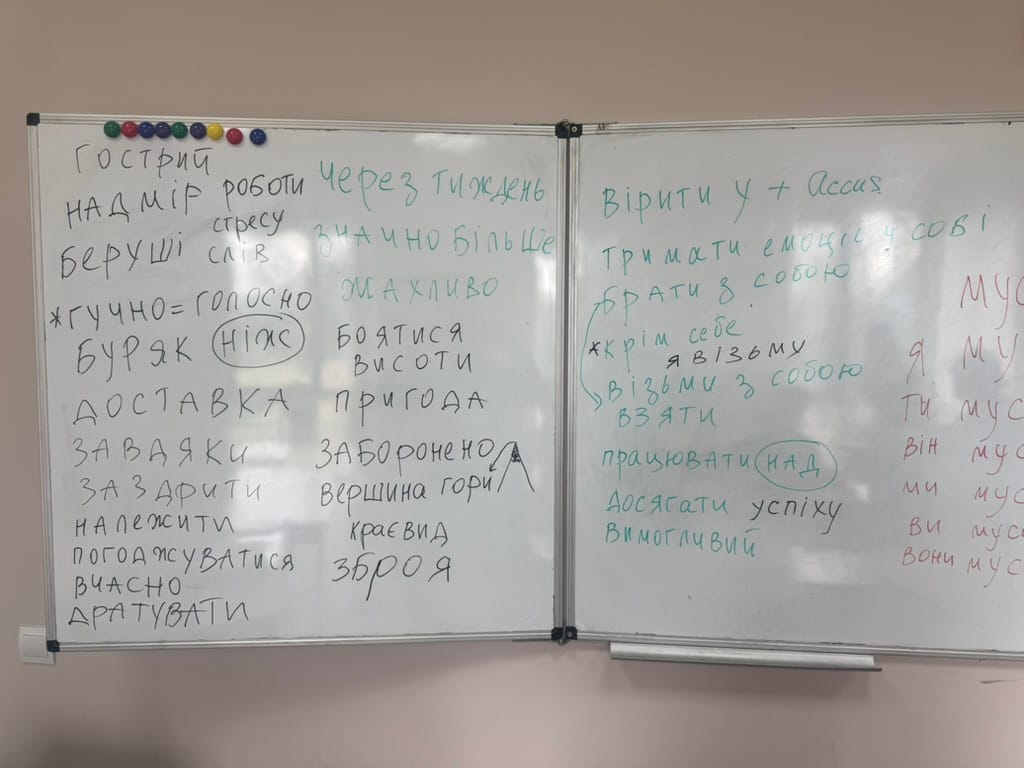
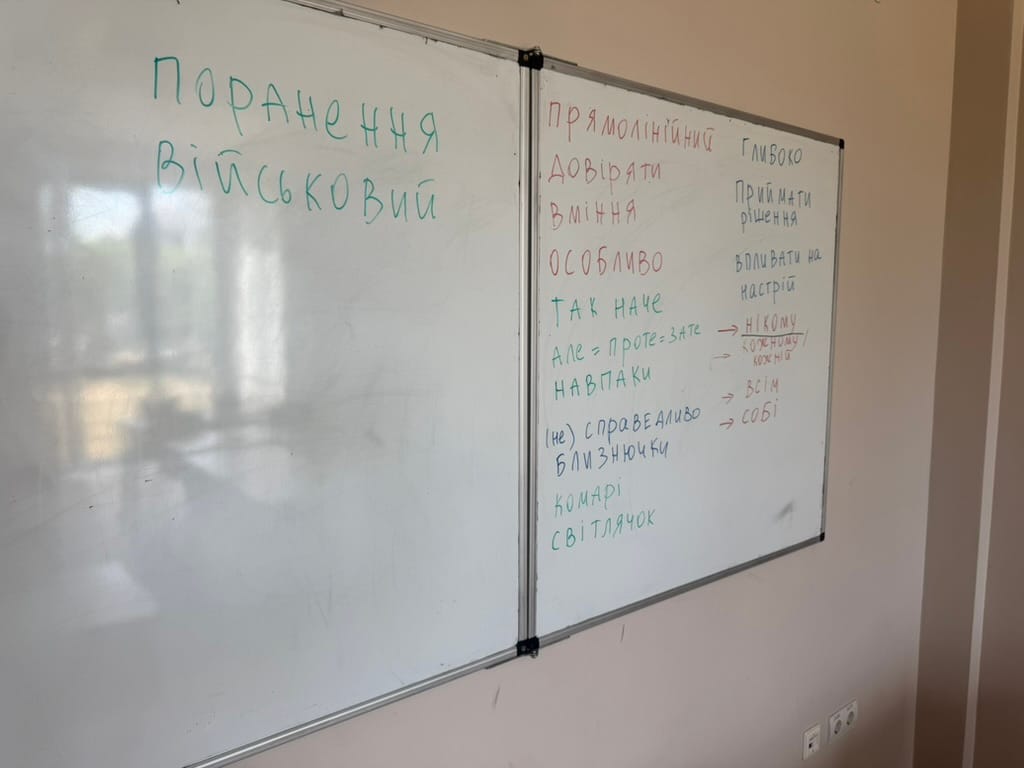
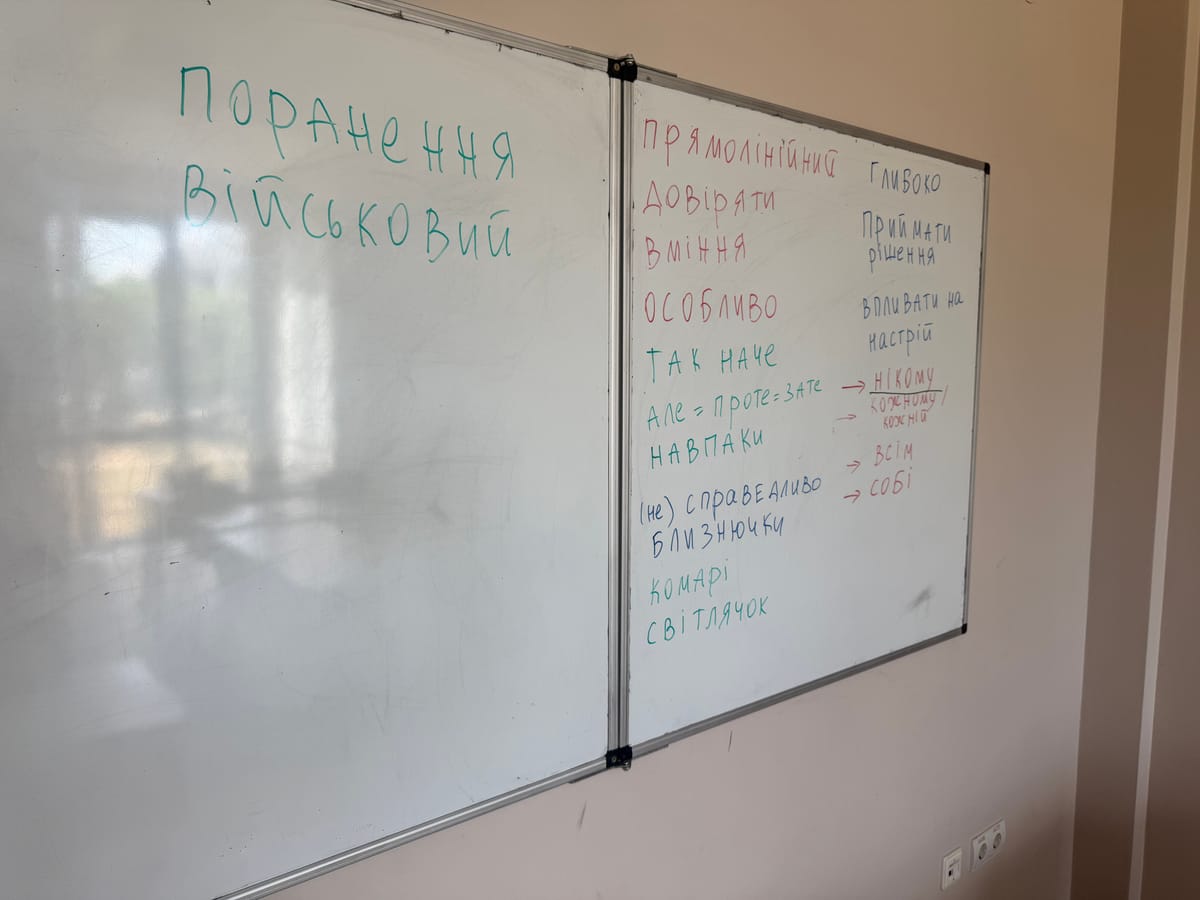
Learning words
Listening to students
In weeks 2 and 5, we were tasked to do presentations — to a combined audience of all students of all difficulty classes in a sort of "mini-conference". Sigh.
I didn't mind presenting something (about Dutch author and former journalist Joris Luyendijk, for example), but as part of a presentation marathon? I didn't see such events unfold in any way that would warrant overriding a morning of proper Ukrainian language classes.
Indeed, the conferences involved trying/pretending to listen for over two hours to the (often battered) Ukrainian of your fellow students in a presentation marathon — with your own Ukrainian-battering presentation sandwiched in somewhere too.
Before your turn, you'd focus on your impending presentation. During your turn, you'd probably read a prepared script out loud. After your turn, you'd savour you did your bit, and focus on the door and the clock above it, counting down to lunchtime.
Don't get me wrong — there were some genuinely good speakers, with interesting stories, and moments of audience participation. Very little idea what was said, though, because my lousy listening skills and exhausted patience made me a distracted school-bench potato most of the time.
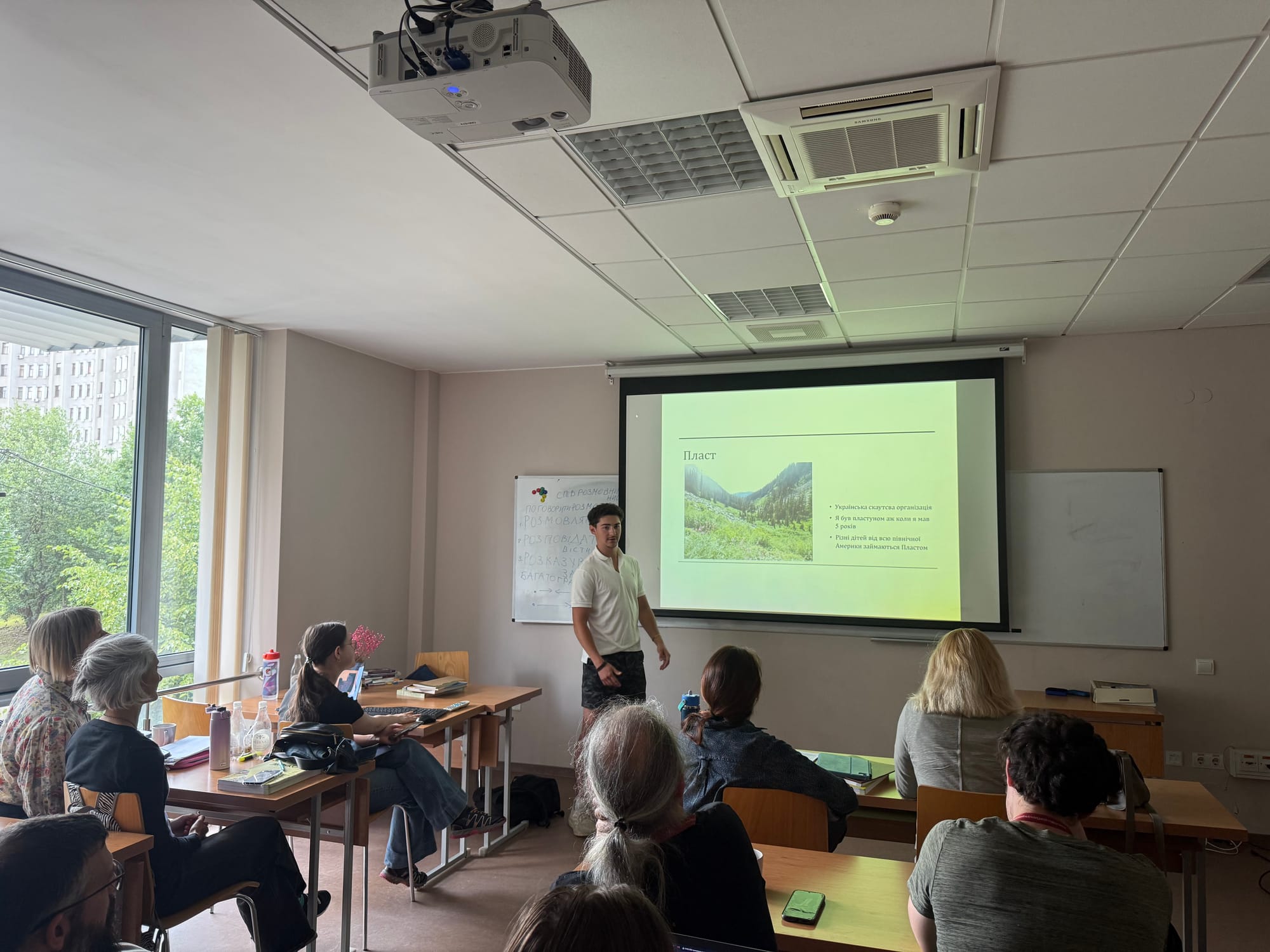
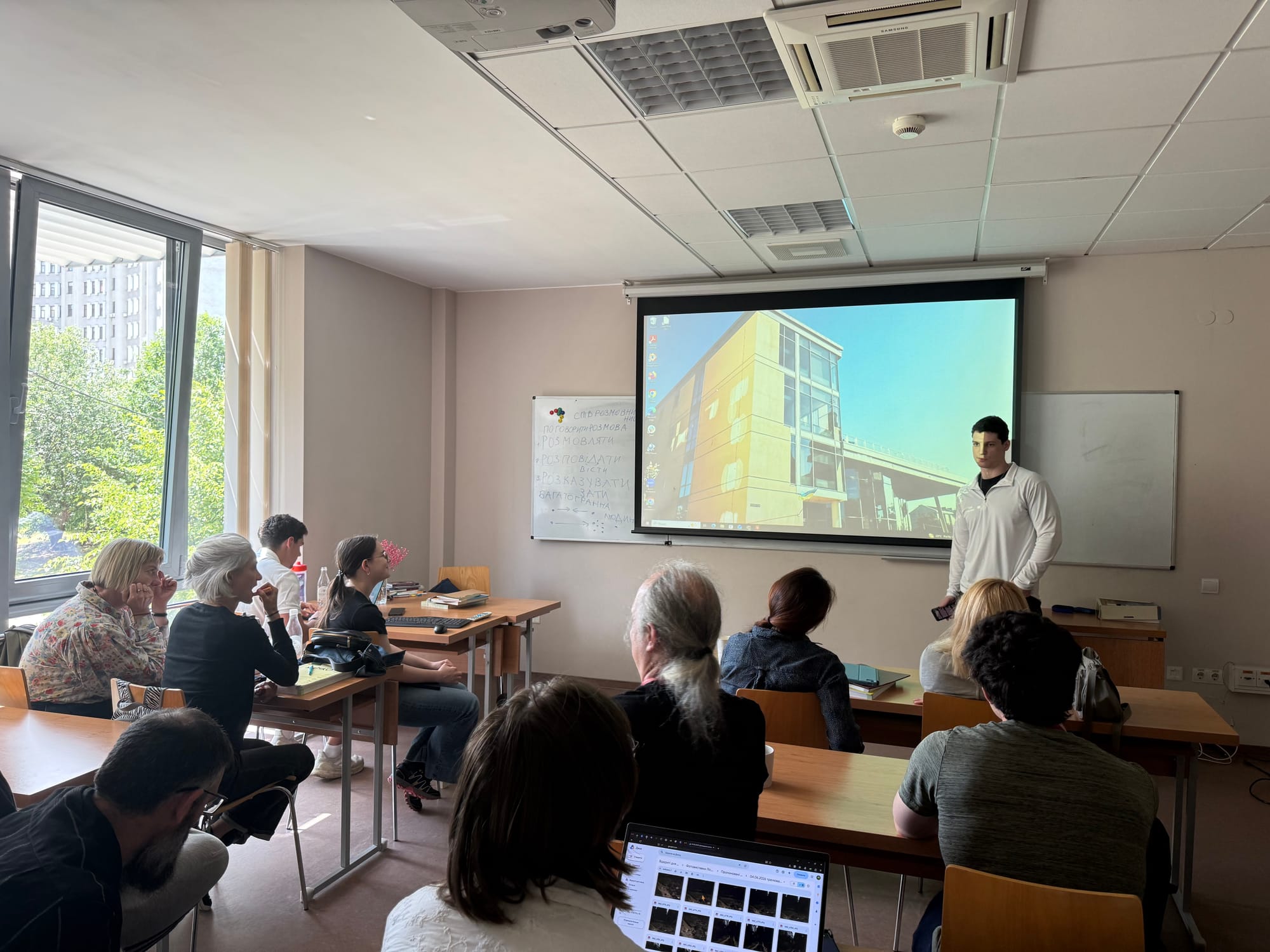
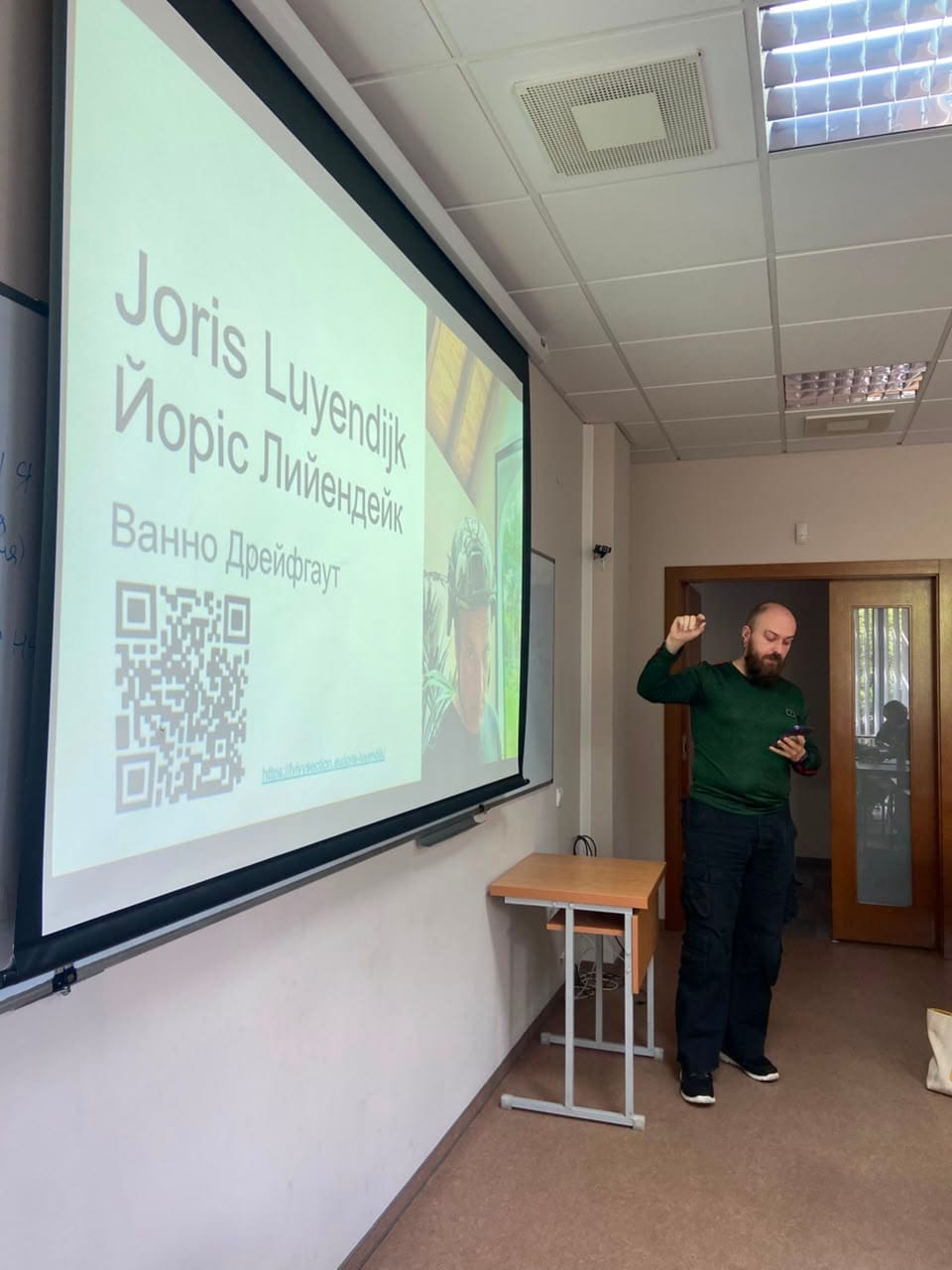
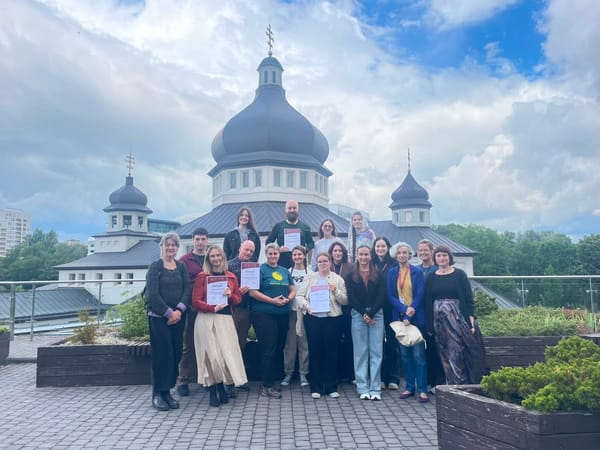
Presentations by some of my classmates and me
Listening to clues
Much more fun and interactive ways to train listening and vocabulary are games, although selecting the right game is quite challenging.
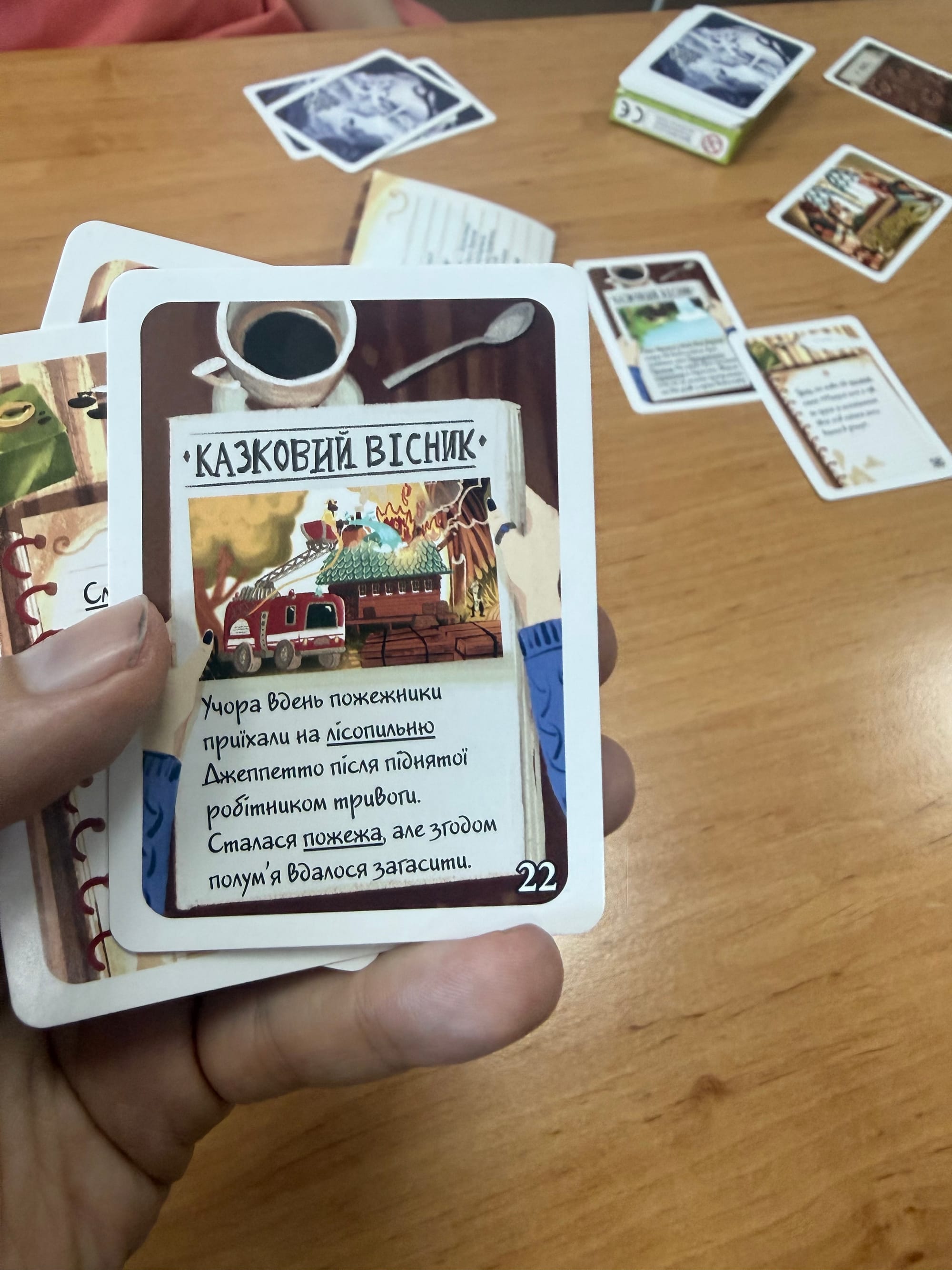
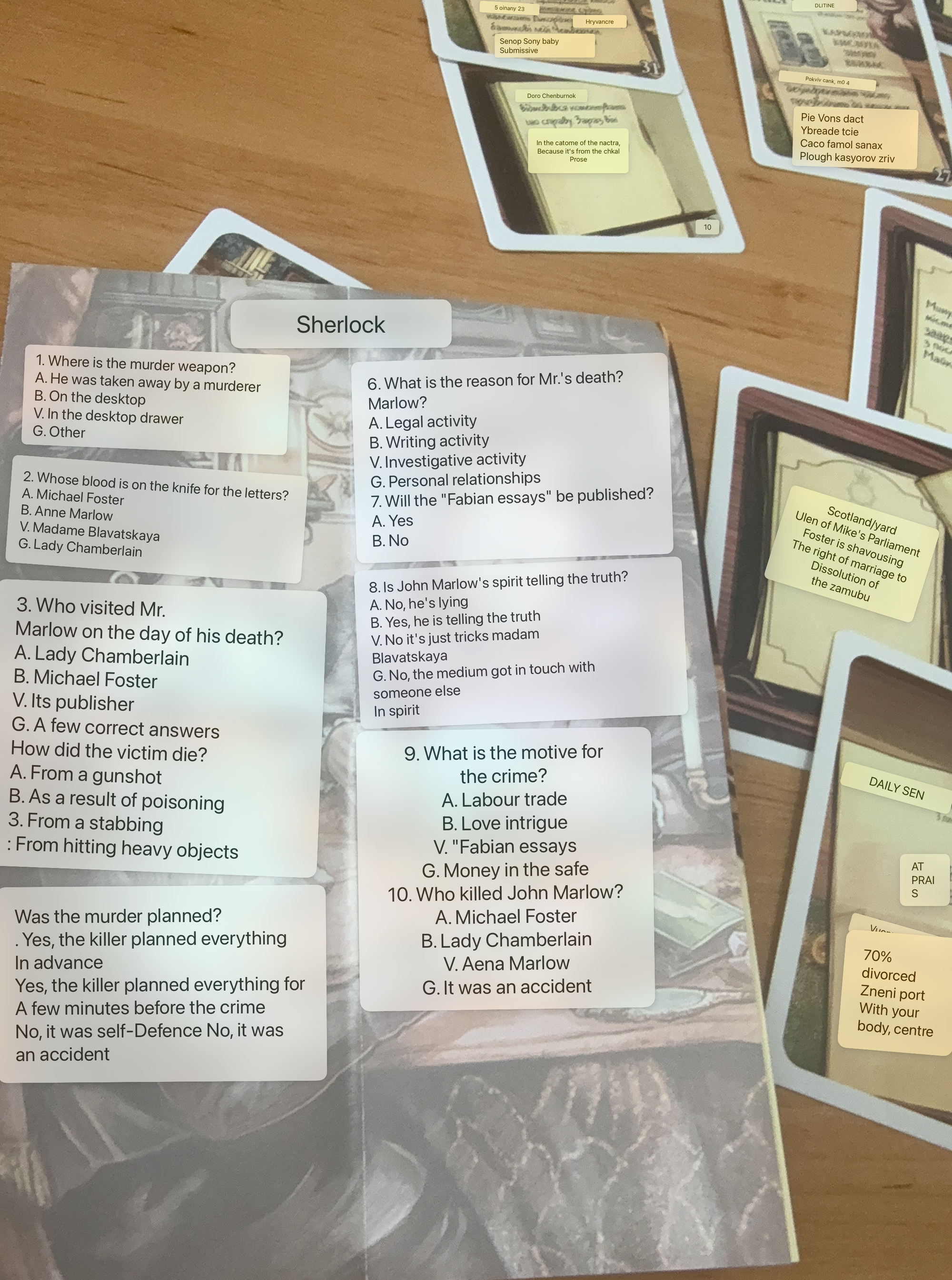
Teacher Sofiia once mentioned the Шерлок (Sherlock) games as being really nice for language learning. When I saw them at the Octopus game shop, I bought a whole stack and hoped we could play some in class.
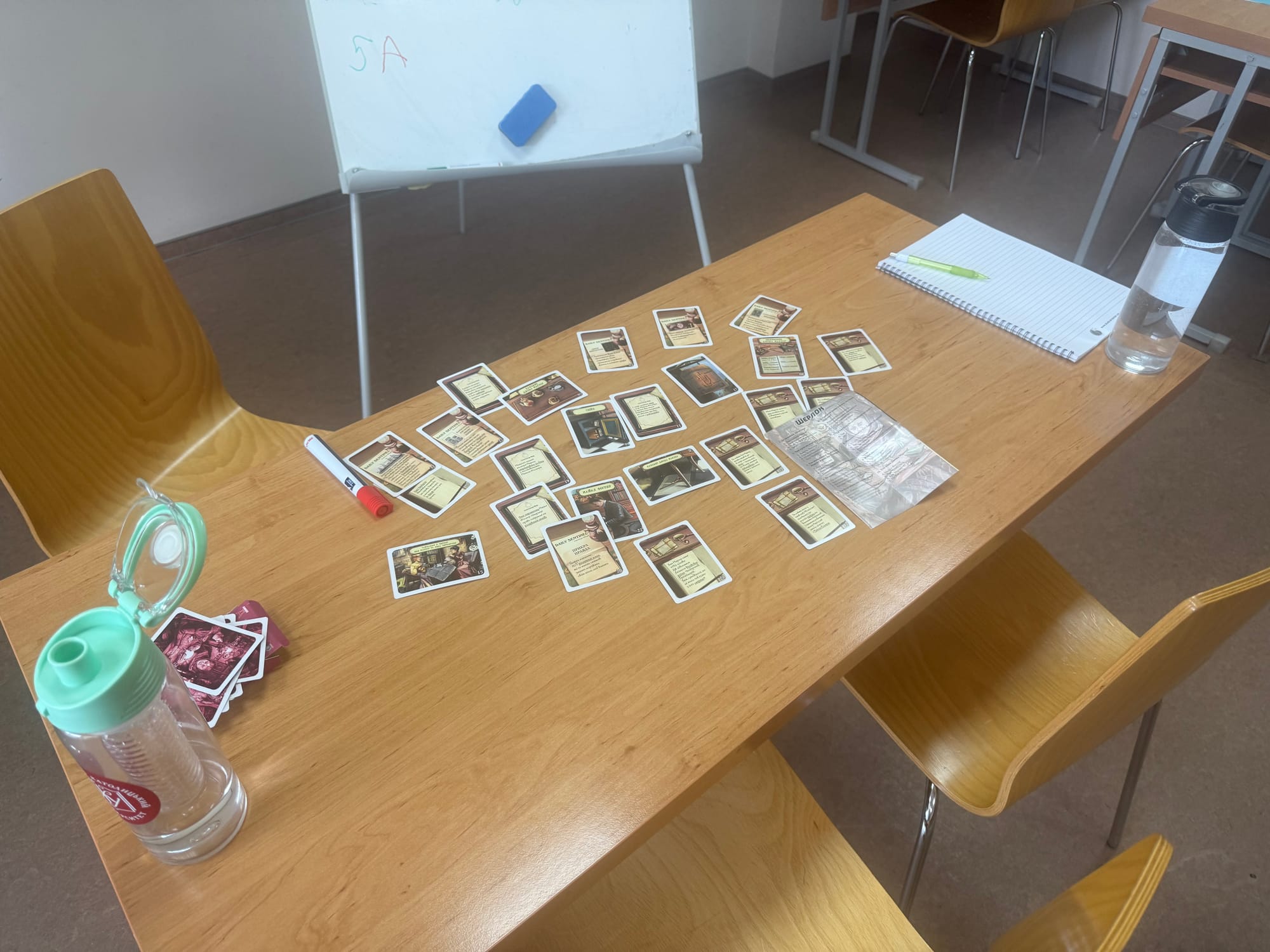
And indeed, we have played Sherlock games in class — two times, in fact. I really enjoyed it, even though the Ukrainian is often (still) too difficult for me to understand — whether I read the cards myself or they're read aloud by a fellow student.
In short: each Sherlock game is a (murder) mystery, delivered as a set of cards. Every card is a bit of story, fact or evidence that may be a valid clue to the plot, or an irrelevant red herring. Each player decides which card to play and which cards to discard. Ultimately, we end up with a (hopefully coherent) set of clues for means, motive and opportunity.
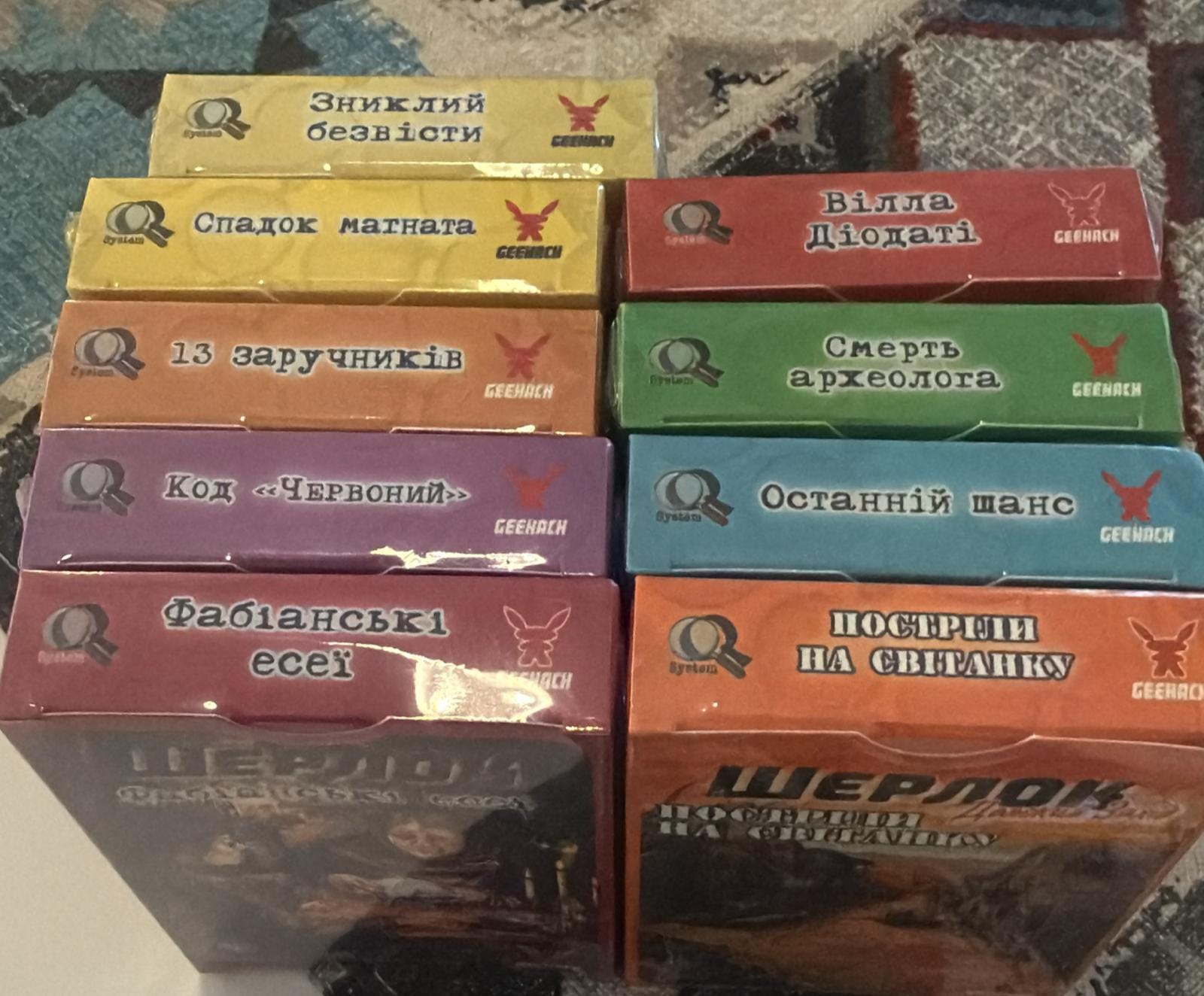
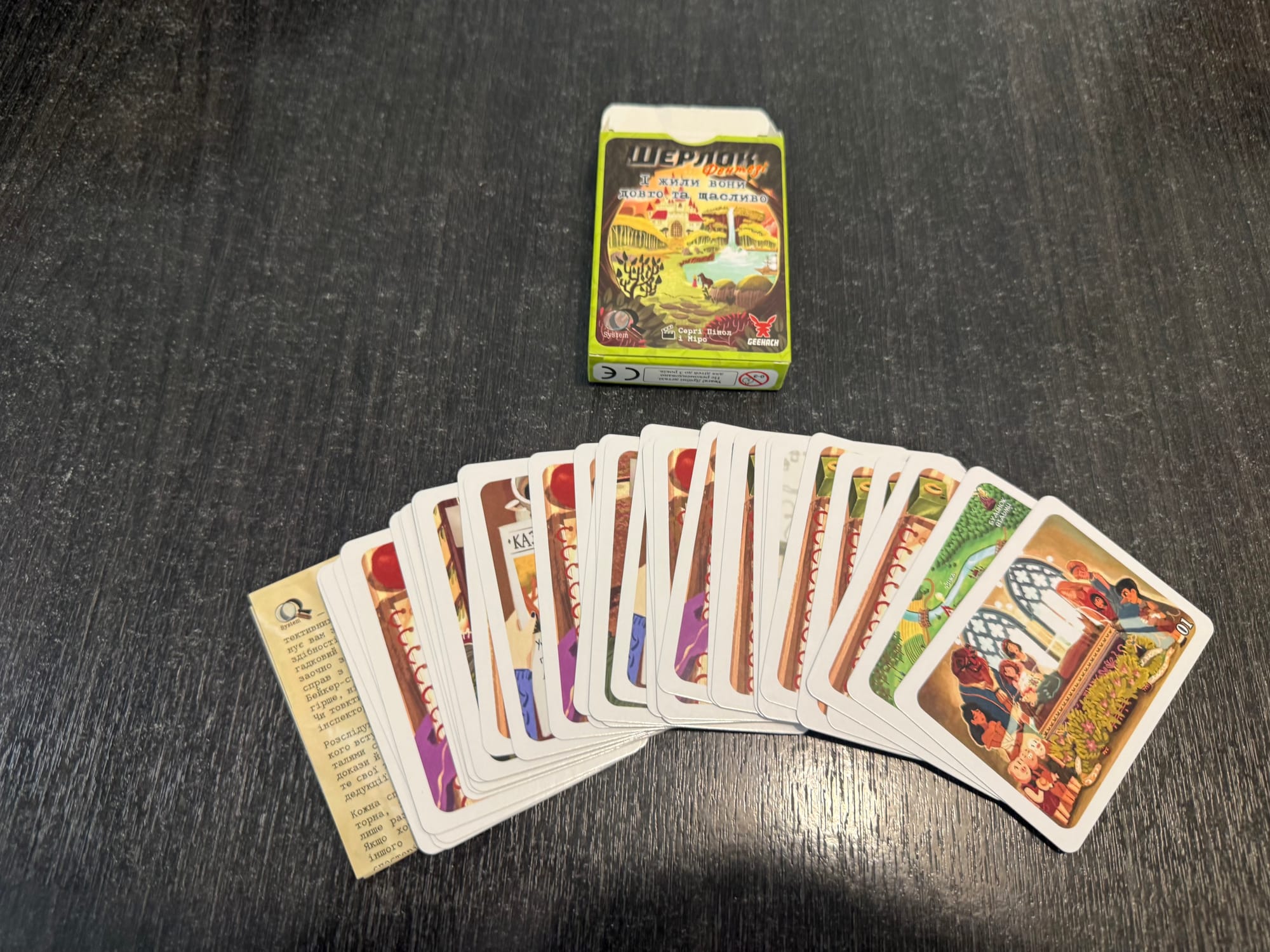
Sherlock
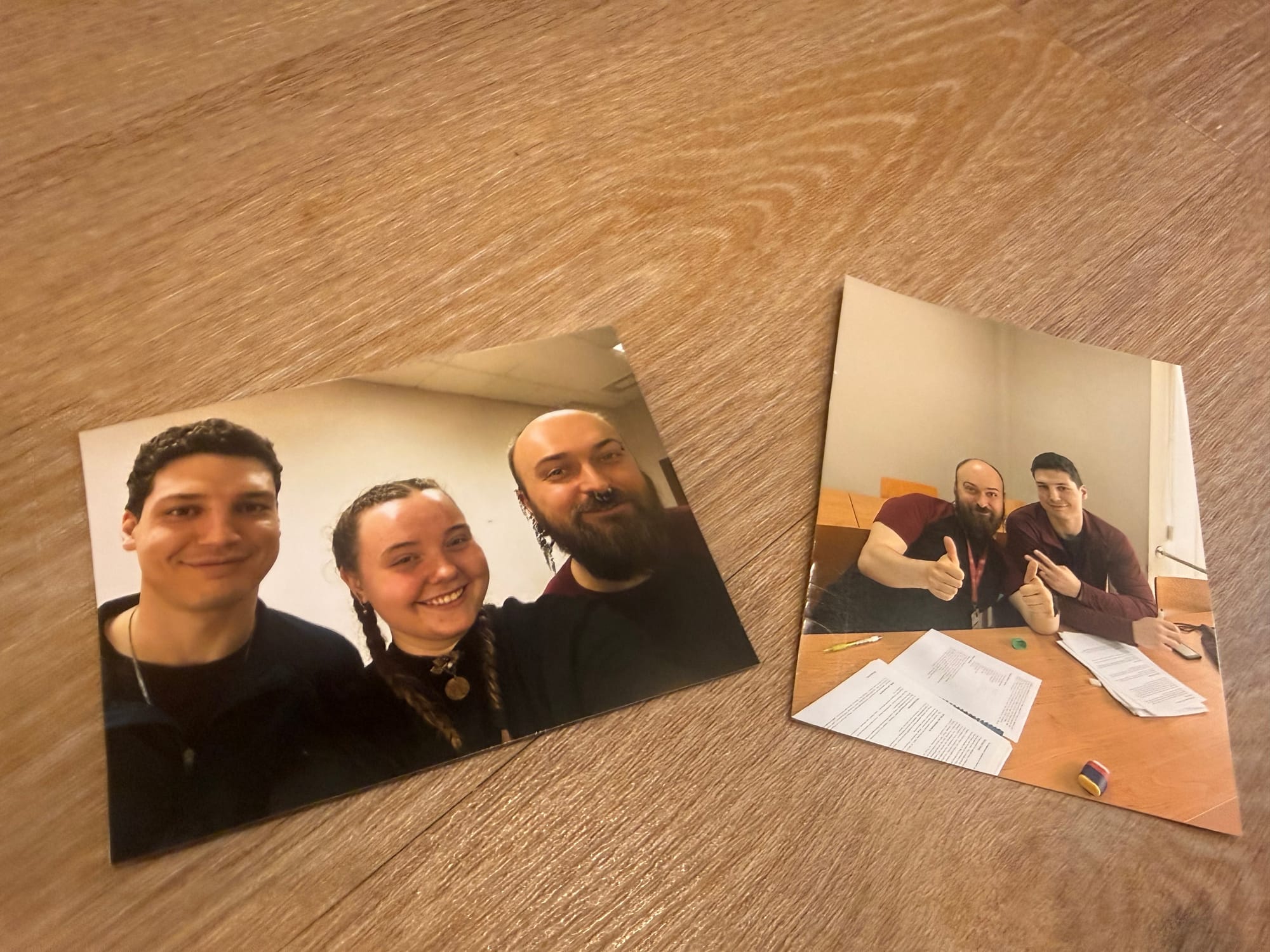
Tutor Nastia is also doing an amazing job getting Nick and me to engage with the Ukrainian language, using games. For example, we've been playing the guessing game "Who or what am I?". Two players decide on a word. The third player asks yes/no-questions to identify who or what they are — basically creating your own clues by using your vocabulary smartly. Super fun!
Listening to videos
To help us learn to listen to Ukrainian, teachers and tutors also look for video materials — such as TikTok videos.
I learned I get really irritated by (some) TikTok clips. The authors often tend to paste the audio of two sentences together so that there's no natural audible line break. It feels like a mental slap in the face every sentence again; it really pushes my buttons.
However, my tutor admitted she actually speeds up those clips because they are too slow for her. So, I challenged her to watch an episode of Tampert until she couldn’t take it anymore 😇. Tampert is an incredibly slow spoof of German detective series by Dutch comedians. (It turns out the episode became somewhat vulgar later in the episode, which I completely forgot about! Oops! Hopefully, our dinner in a fancy restaurant earned me their forgiveness!)
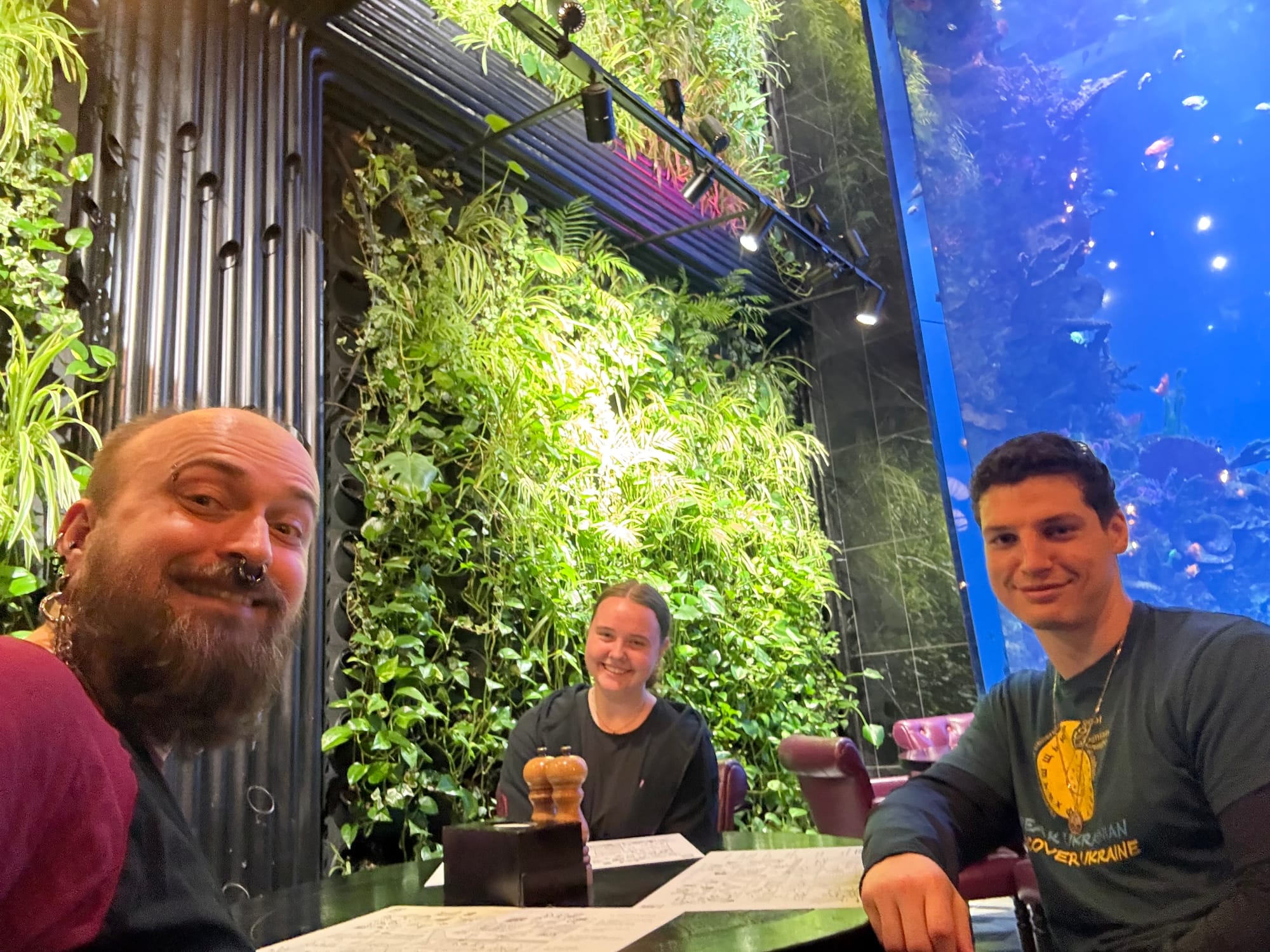
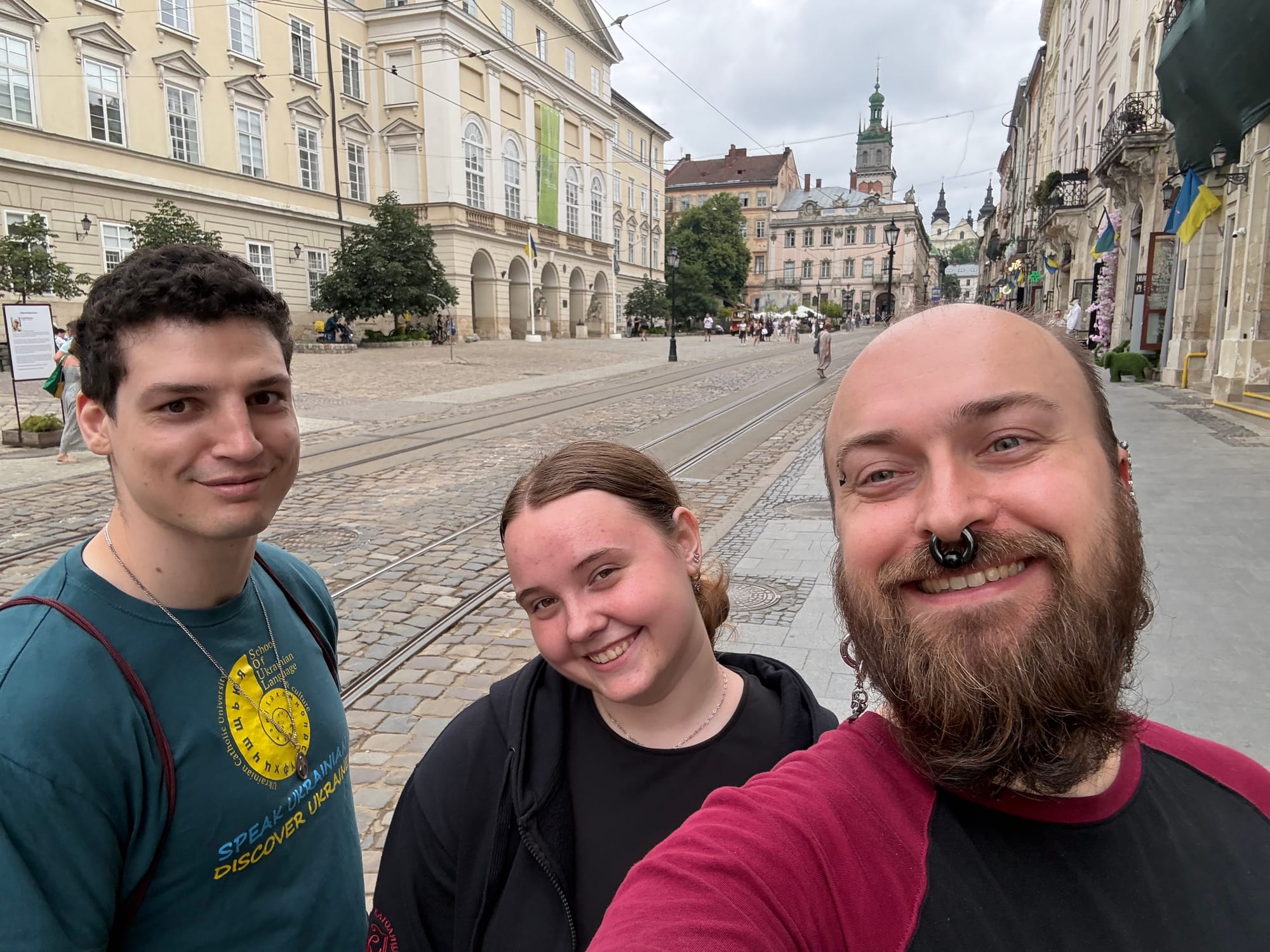
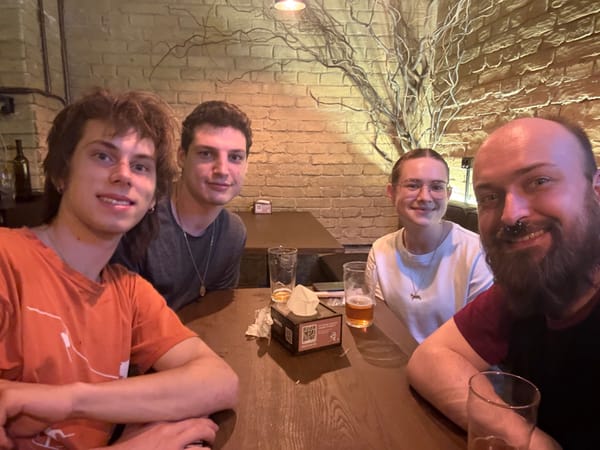
Nick, Nastia and I
Anyhow, Nastia lasted 5 minutes of Tampert — an admirable result. She had tears in her eyes of frustration, was fidgeting with her hairband, and tapping her foot in agony 😅. Tampert was indeed agonising, but the schadenfreude made up for it. Nick was collateral damage in this whole ordeal and suffered in serene silence.
In the end, we compromised: Peppa Pig and Spongebob Squarepants are now the educational video content of choice.
Listening to friends
Immersing myself in the Ukrainian language with real people works even better than with cartoon characters.
I was again invited to my Ukrainian friend's house for a delicious dinner. During this dinner I enjoyed the fruits of my labour since last year. This time, I could hold a bit of a conversation in Ukrainian! Yes, I did need some supporting English, slow pronunciation, and some repetition. It was legitimate progress, all the same. They also told me that my Ukrainian sounds good — no "russian jaw" for this dude. Nice!
My Ukrainian friend also has been learning Dutch. Although she picked it up much sooner than I'm picking up Ukrainian, speaking still often feels awkward to her. (Note: this could be simply an intrinsic quality of the Dutch language.) Hopefully my improved humbling mumbling stumbling with the Ukrainian language helps stretching that comfort zone a little bit!
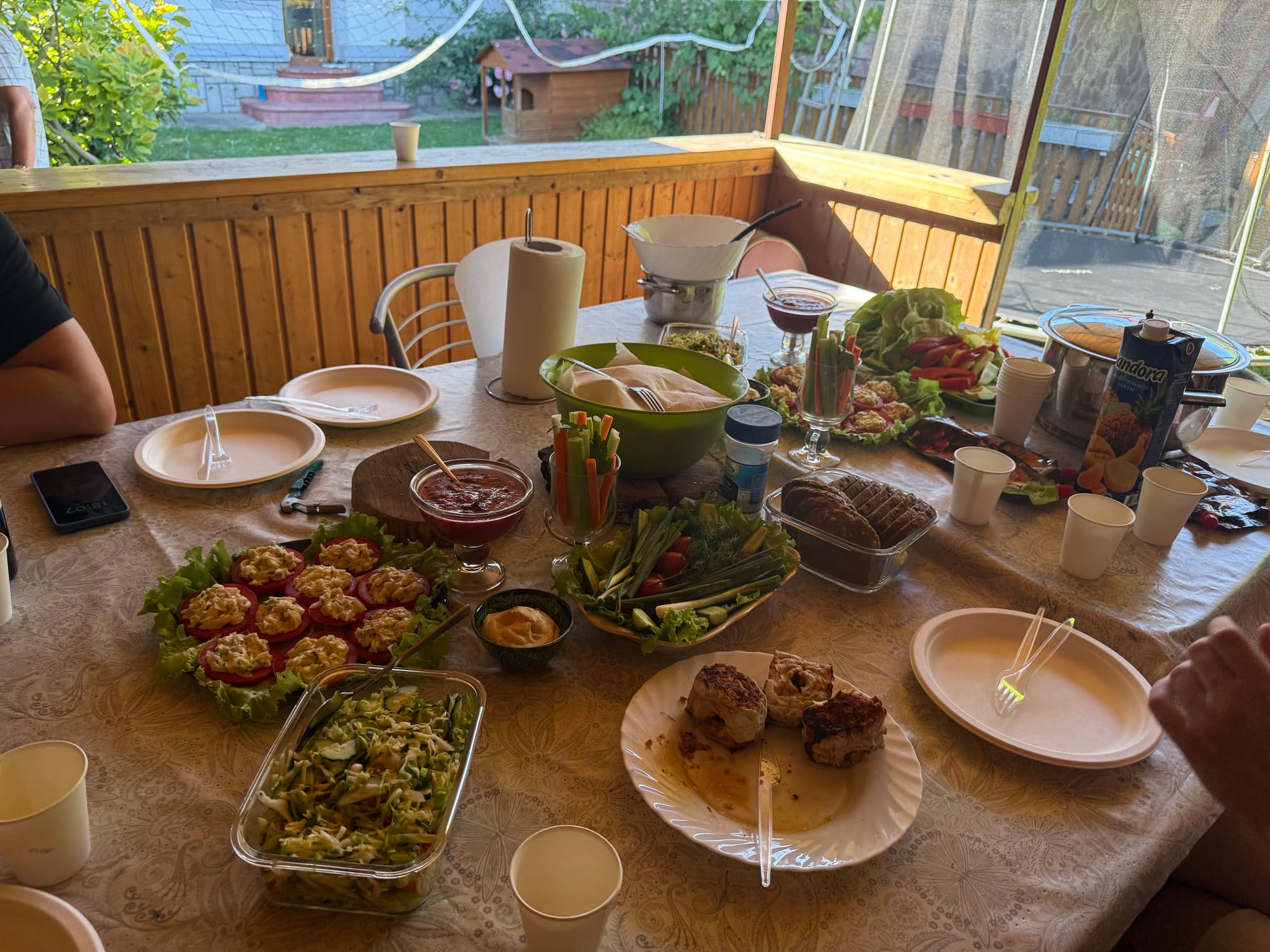
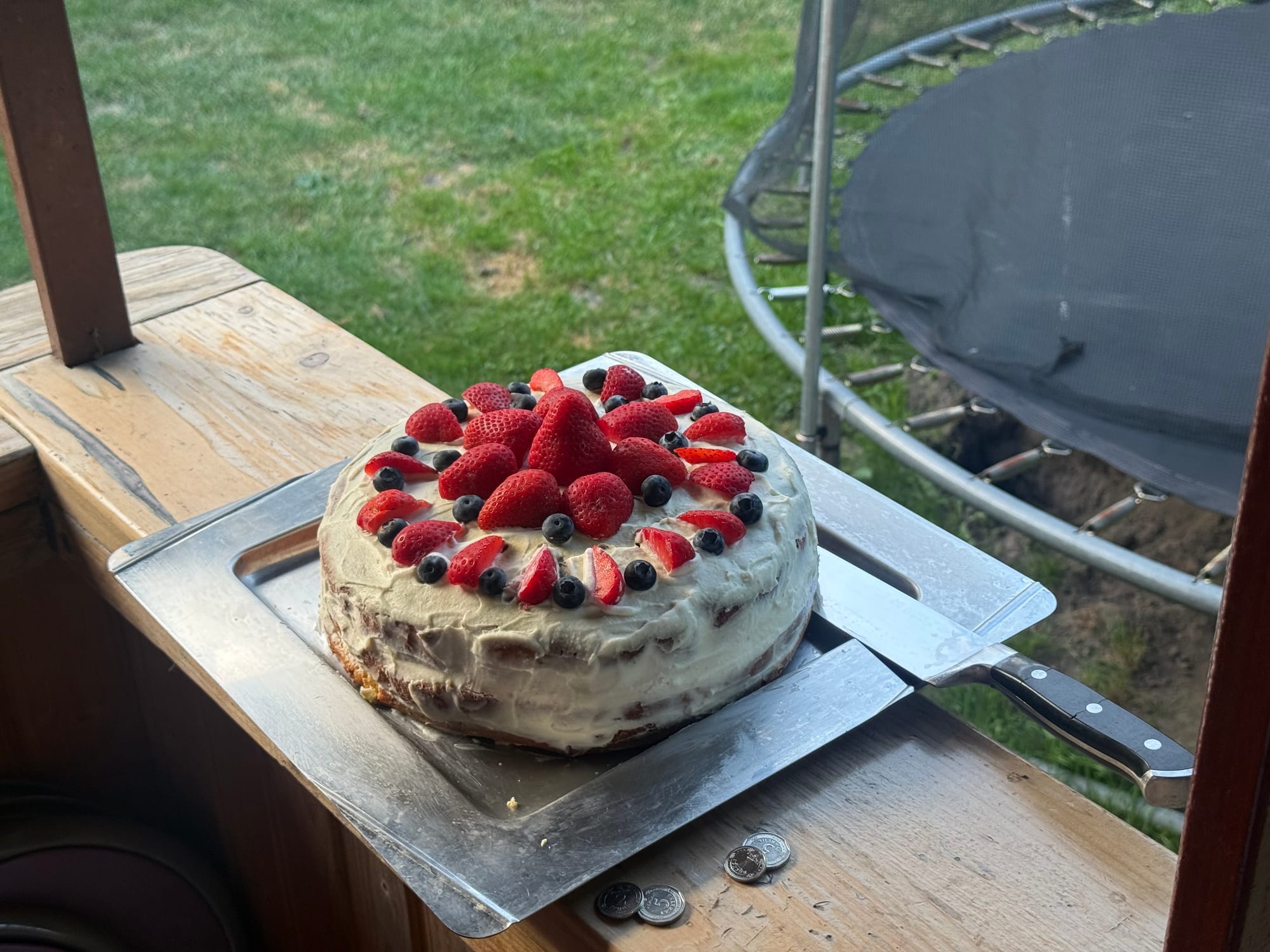
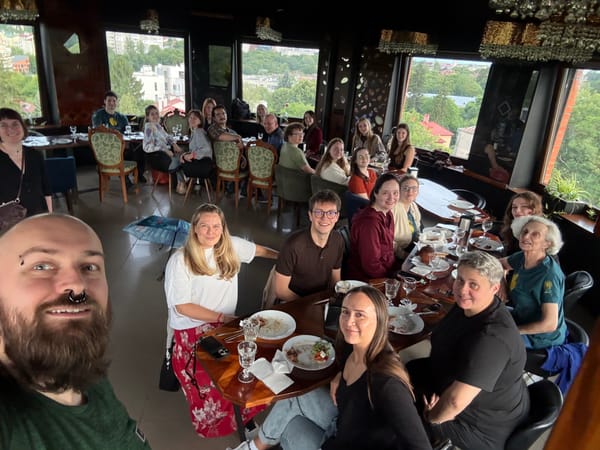
A lovely dinner
Listening to myself
I was pretty happy when I noticed in the last few weeks that my listening skills were finally improving somewhat. It's a weird feeling when you notice sounds becoming words in your mind unexpectedly early or easily — a sort of meta-thought like a deja vu, as you realise you already knew the meaning of words that you hadn't finished hearing.
Overall, my second Summer School experience is quite different from the first. In the first year, I felt many more noticeable leaps in ability. That's easy, starting from close to zero. This second year involved a lot more repetition and consolidation of what I should have known since the first year already, which did make me feel a bit incompetent.
Listening to my competent diaspora classmates in the first three weeks of the course didn't help either — I was a bit outclassed, for sure. The second wave of students who arrived in week 4 gave me a new perspective, though. Some of the new students started from scratch, and I recognised in them myself from one year ago. And that made me recognise my own progress over the last year.
I'm glad to report I can now confidently speak Ukrainian with training wheels — squeaky, loose, wobbling, and nearly off — finally.