🔰 A fresh restart
We got our introduction program on Monday, and first classes on Tuesday. Some of the class mates and staff are familiar; many are new.

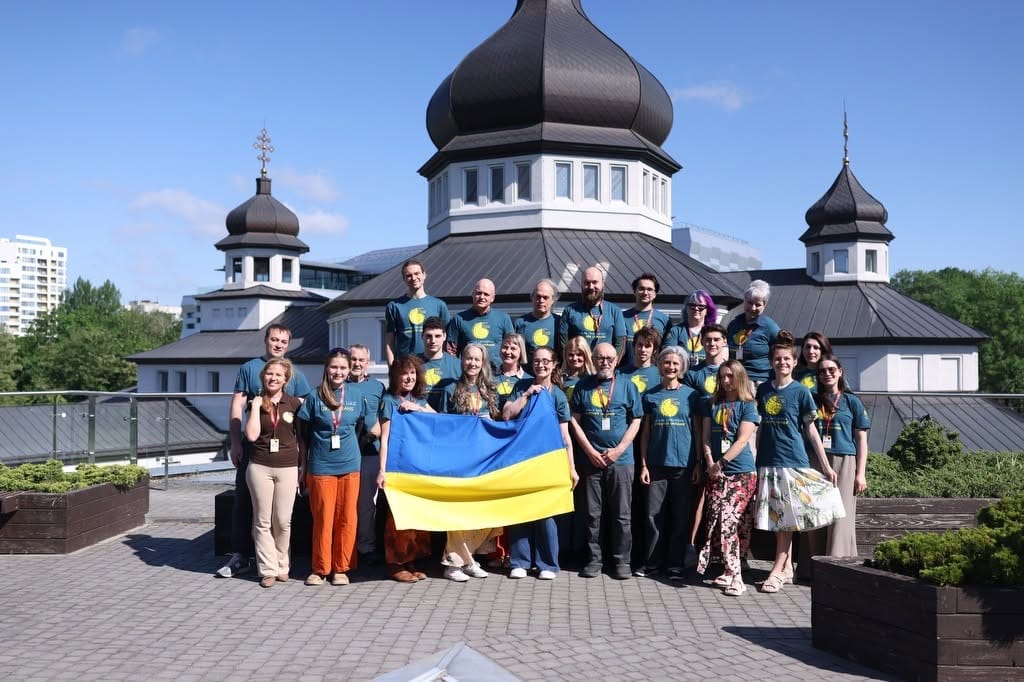
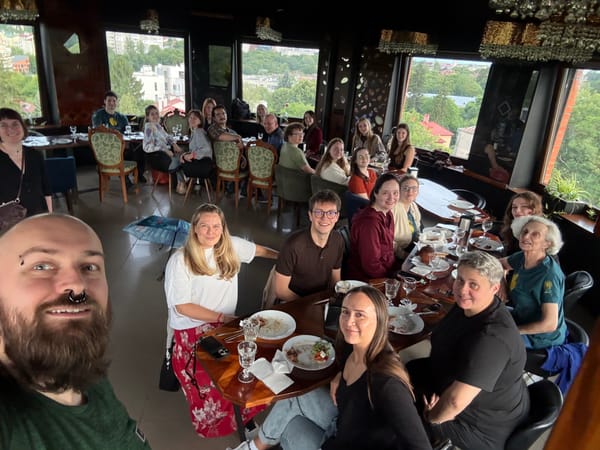
Overall, the introduction day was very similar to last year. It was nice that our introductions didn't begin in the air raid shelters this time — unlike last year. Rather, we met over breakfast in the trapezna (the canteen) as planned.
My fellow students
This year's class seems to start with about 19 students, compared to the 12 or so (I think) last year.
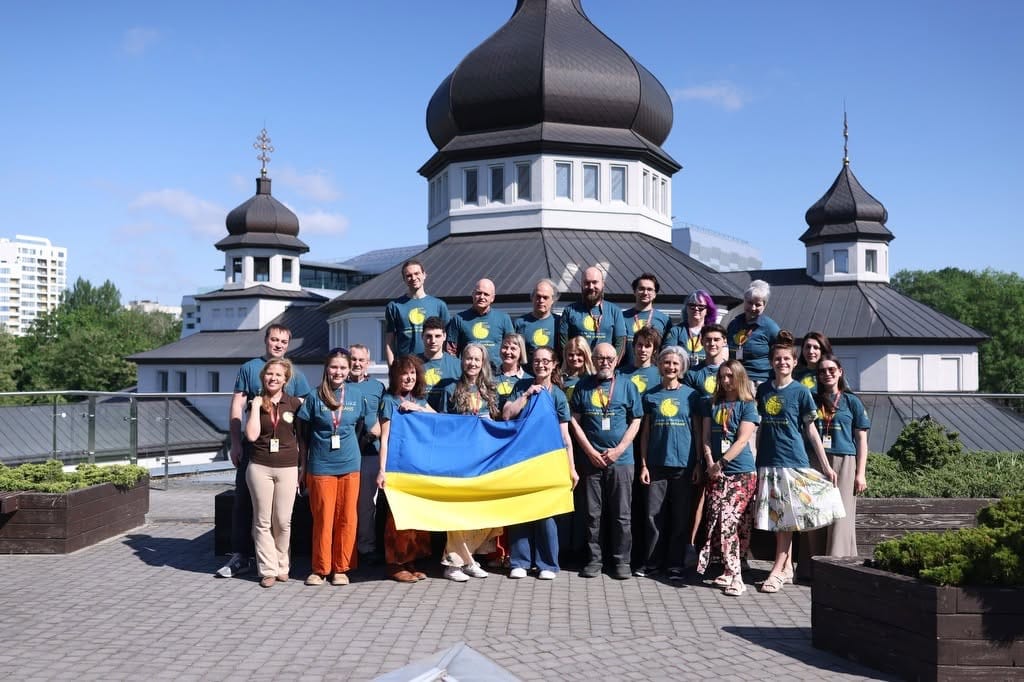
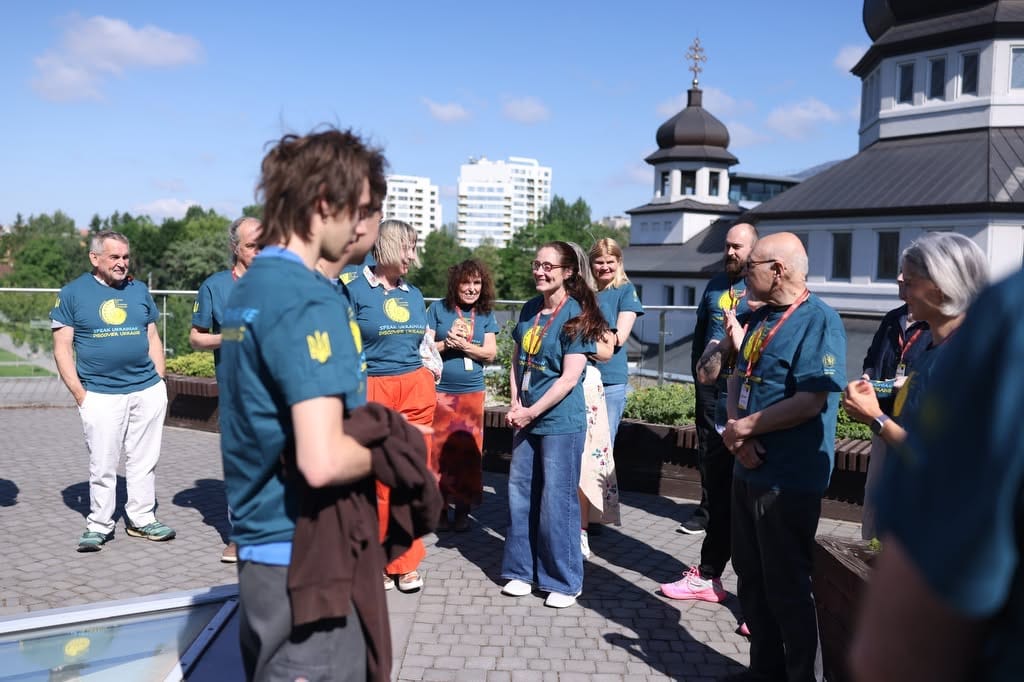
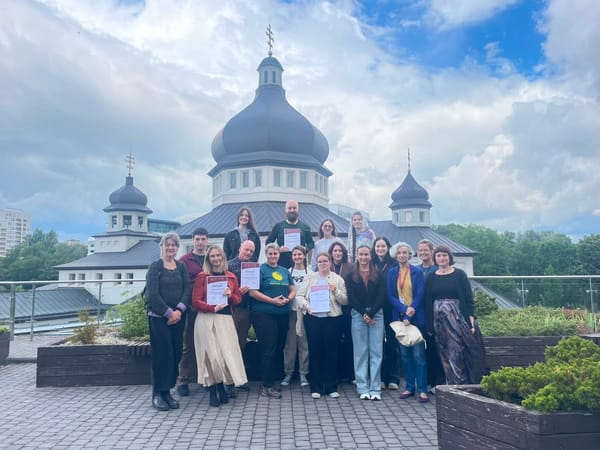
Our crowd of teachers, students and staff
There's a lot of variety among students. We have someone who meets soldiers at the front to send them donated vehicles. There is a serial blogger. There are young people, old people. First-timers and returning students.
There's also a surprising number of "heritage speakers" from the Ukrainian diaspora to America — these are Americans of whom the (grand)parents were Ukrainian and emigrated, and now the (grand)children want to claim their Ukrainian heritage.
Heritage or not — the average level of Ukrainian among students seems high. Like, when teachers and tour guides were speaking in English, the students would still ask their questions in Ukrainian.
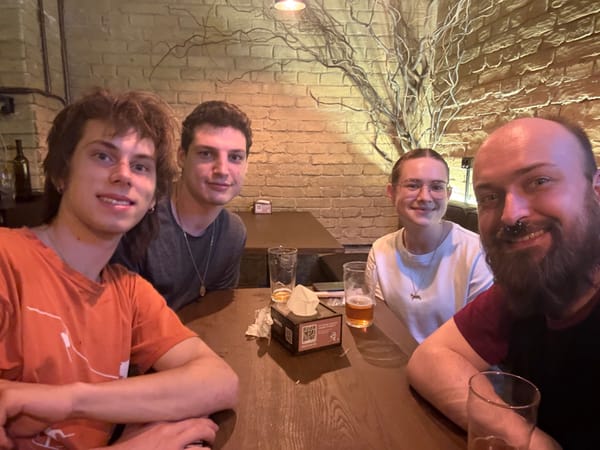
I've yet to fully learn everyone's story, but one especially pleasant surprise was that fellow Dutchman Daan Verbaan joined this session. He already did the course two years ago and was asked by the UCU to help me prepare for my trip a year ago — and now we finally met face-to-face. I think I might've spoken more Dutch on Monday than either English or Ukrainian.
(Should I admit it is a bit of a guilty pleasure to speak Dutch in these surroundings? It feels like speaking some secret language in public — very audacious. Of course, the only thing secret about Dutch is the logic of its grammar, but that's beside the point.)
My language test and interview
Early in the morning, like last year, we had to do our placement test. I don't know if it's exactly the same test as last year, but I vaguely suspect it might be.
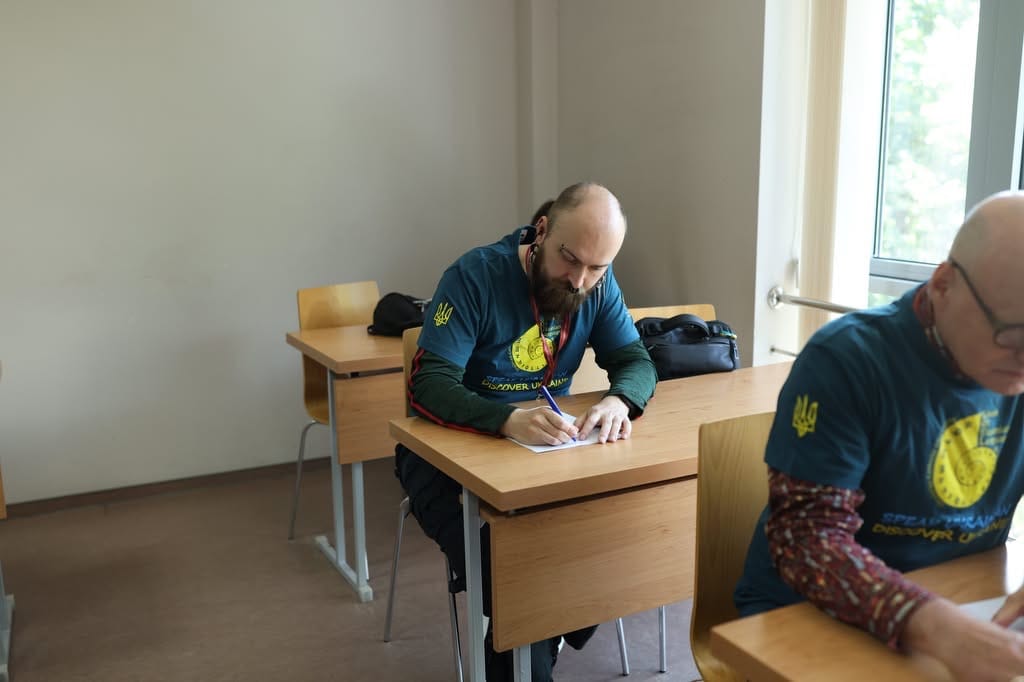
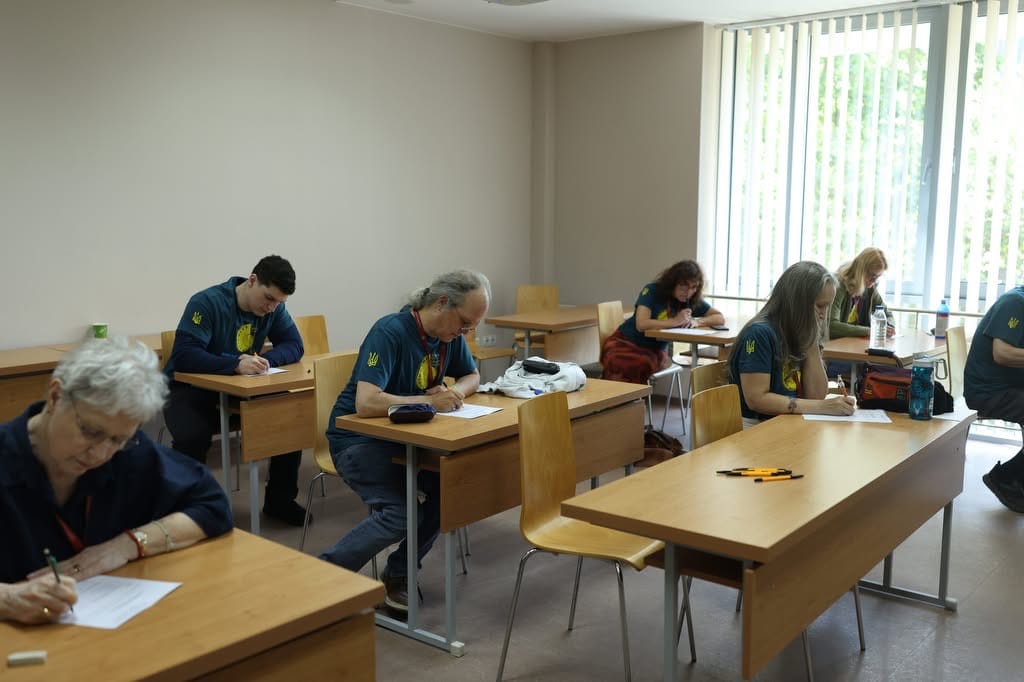
Students being tested
We don't get the test results back, so I have no idea how well I did. I think it wasn't disastrous, but definitely worse than what I should know by now. I forgot basic words, grammar, and many other trivia one would hope were ingrained by now. Translating a basic word like "father" took (too) serious thought.
Afterwards, we had interviews with all teachers. During my interview, I could relay again that I want to work on my listening skills. I think I said that in answer to an actual question about what my expectations are for this course, but it's always a bit of a guess when you only pick up keywords from the question.
That border-cross-style communication breakdown still occurred at the very end, though. In Ukrainian, one of the teachers supposedly welcomed me to the class! I'll have to trust the teachers on that, though, because I just did not parse the sentence — even when uttered repeatedly and word-for-word.
Playtime is over!
The first lesson on Tuesday was an experience quite different from last year. Last year, I was put in the "advanced beginners" class — with those who've been playing with Duolingo and know the Cyrillic alphabet already.
This year, I have the same teacher as last year and in my digital lessons since then. This is nice! She knows me — including my struggle with listening.
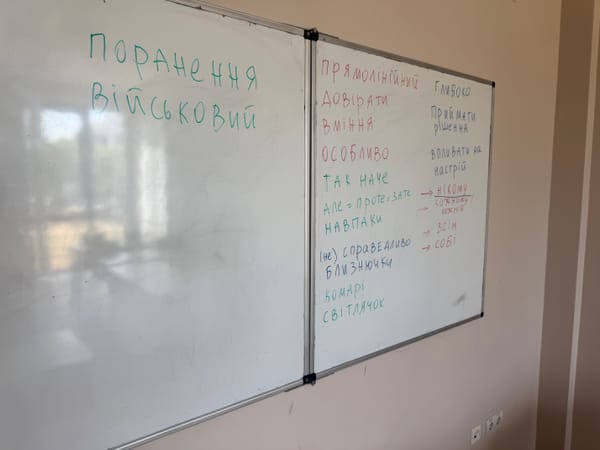
So... the teachers put me in the "diaspora" class. The young diaspora people are eagerly and confidently speaking in Ukrainian. Their Ukrainian may be broken here and there, but they tend to hone their intuitions quickly and grow at rocket speed. Our teacher also teaches for longer stretches in Ukrainian only — so without the ample English translations and explanations I was used to. That's some real dedication there that I need to match!
My edge in this class is a better formal understanding of grammar, but it's brittle, probably temporary, and apparently a liability as well. Understanding grammar patterns is nice, yes, but that also means you notice deviations from those patterns.
For example: in our first lesson, I noticed "зі своїм собакою" (zi svoyim sobakoyu; with one's dog) written in some exercise. This was weird, because "своїм" is a masculine declension and "собакою" is a feminine declension. That can't go together, right? Genders in a single phrase should agree, right? Right?!
Now, I knew собака is a dog (of any gender) and yet the word itself (ending in an -a) looks grammatically feminine. So, I could already sense that this was forbidden fruit, but I just had to take a bite — I had to ask for the explanation. And boy, the teacher then took us on a journey of the "organised chaos" (her words) of gender-bending shenanigans that stripped whatever naïve innocence I'd had about the language.
All this hardship hasn't dissuaded me from learning Ukrainian. Let's be clear: it should — this sort of cardinal rule breaking should be disqualifying. It's madness! And yet somehow, I just want to tame all this grammatical quirkiness and make it my own. I think I finally understand what compelled Pandora.
So, holiday is canceled, playtime is over; I need to step up my game! This class seems like it will be great fun, but it has also become my gauntlet — I must pick it up! (Now what was "to pick up" in Ukrainian again?...)
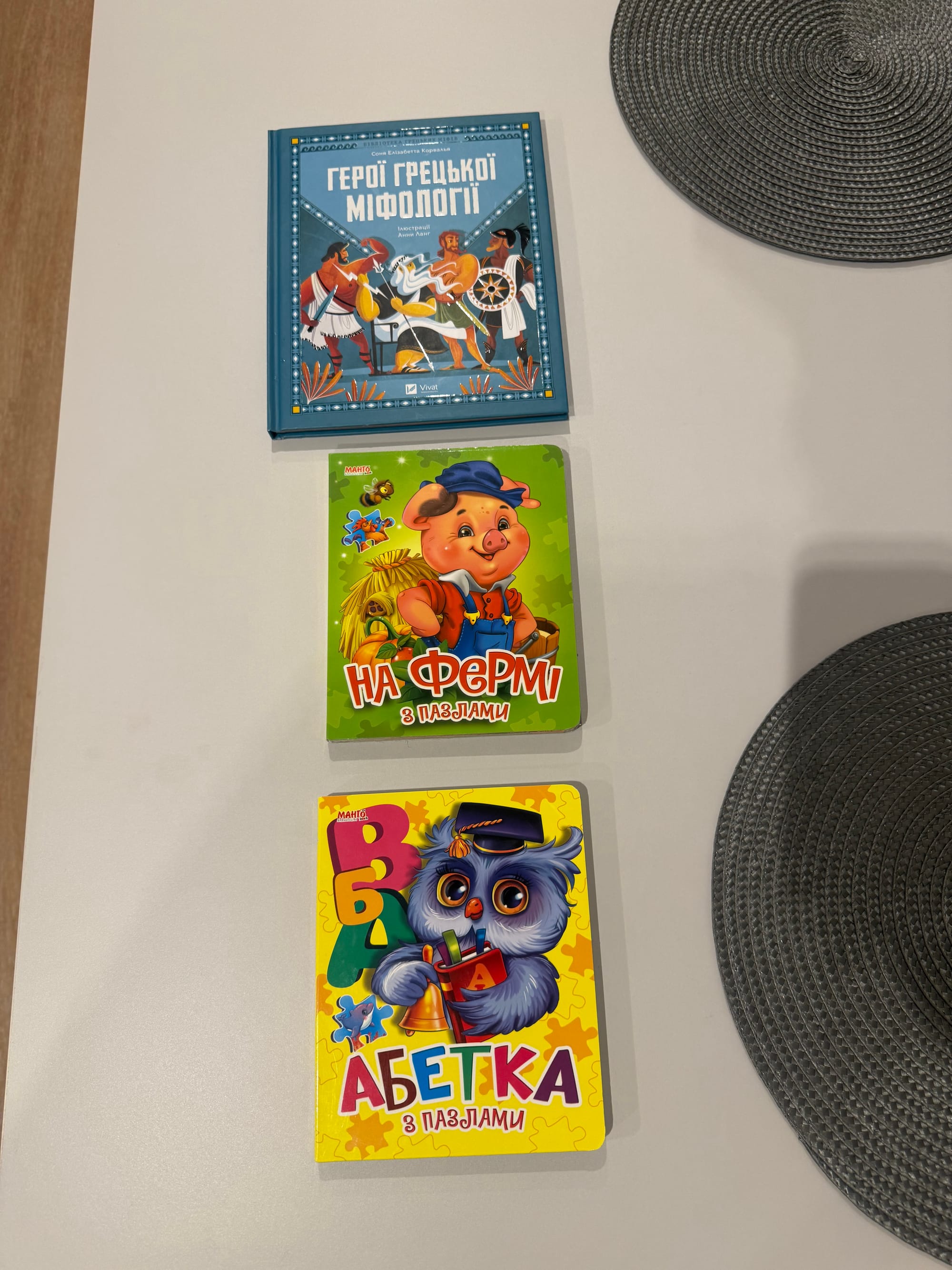
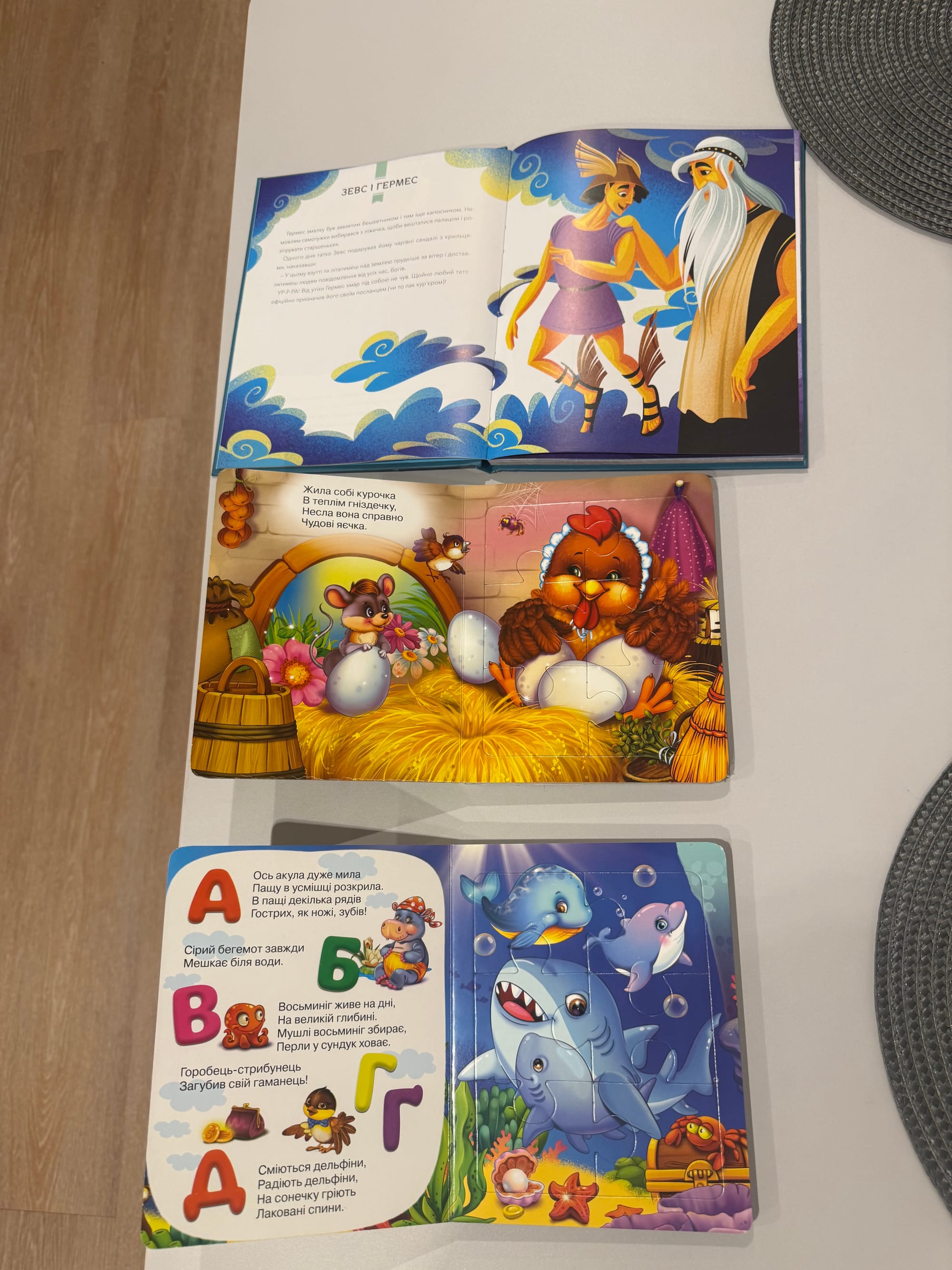
Bought new training materials befitting my ambitions